Session 8 : Economic and Fiscal Europe
For this eighth session, the Académie’s participants were immersed in the economic and strategic challenges facing the European Union. Welcomed at the headquarters of the Confédération nationale du Crédit Mutuel, they engaged in discussions with three high-level speakers on major themes such as the European budget, the financing of the economy and European sovereignty. It was a session rich in analysis and insights, which provided a better understanding of the challenges currently facing the Union.
Putting credit back at the heart of European financing
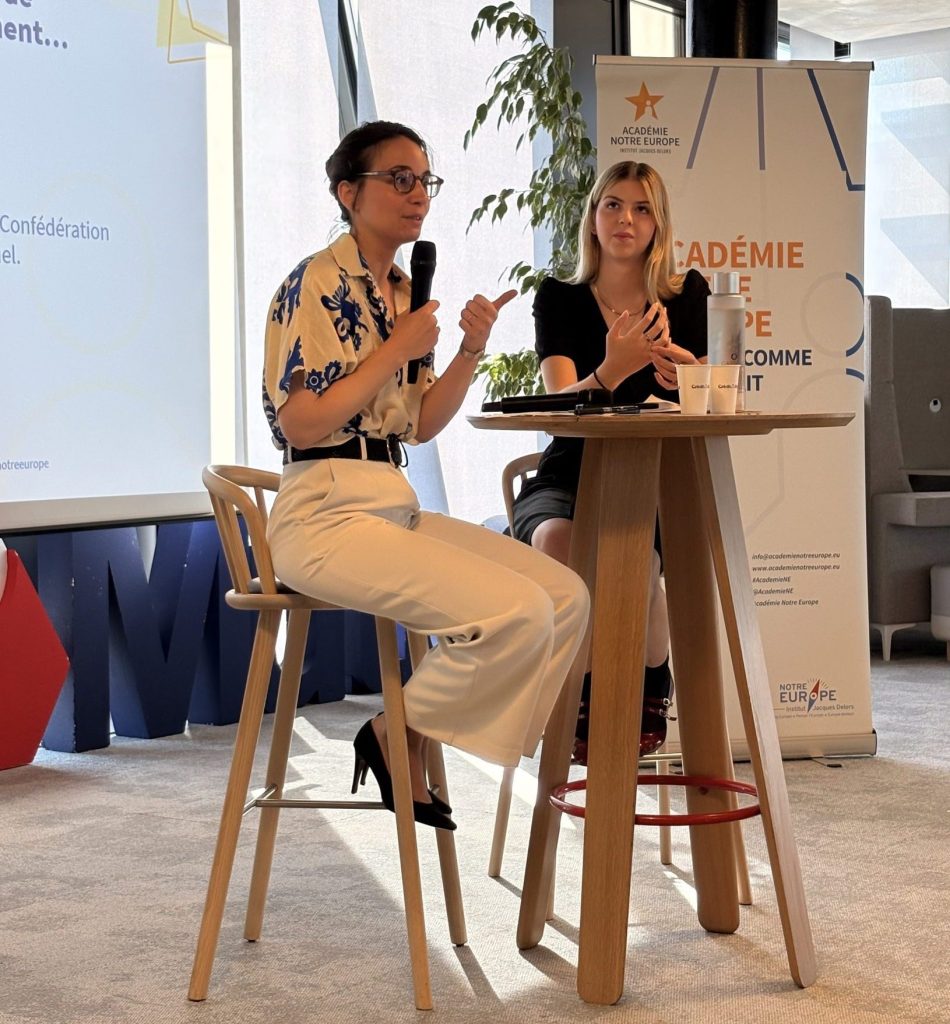
Priscille Szeradzki, Chief Executive of the Confédération nationale du Crédit Mutuel, draws a clear distinction between cooperative banks and capitalist banks, which she described as fundamentally different. Cooperative banks emerged in the 19th century in response to the exploitation of the working classes by local moneylenders. They are based on a key principle: one person, one vote, regardless of the capital held. This model of democratic governance, which remains at the heart of their current operations, coupled with the absence of dividend maximisation and financial stability based on the retention of profits, enables cooperative banks to finance regions far from major cities. These areas are often neglected by other players in the banking sector, for fear of risky investments. However, Priscille Szeradzki embraces this role as the embodiment of the collective interest by refusing to restrict finance to a wealthy clientele. In her view, “the very principle of mutualisation rests on a mix of diverse profiles and incomes”.
Looking beyond the cooperative model, Priscille Szeradzki highlighted a blind spot in the debate surrounding the Savings and Investment Union: the central role of bank credit. Bank credit currently finances 75% of economic activity in Europe, and relying solely on investment to meet the continent’s financing needs would be a mistake. It is also necessary to stimulate credit, including to “riskier” businesses such as start-ups or in the context of LBO transactions. This involves simplifying regulations that are all too often bogged down by institutional processes, where the text emerging from the European trilogue ends up stripping political agreements of their substance.
What will the EU budget look like after 2027?
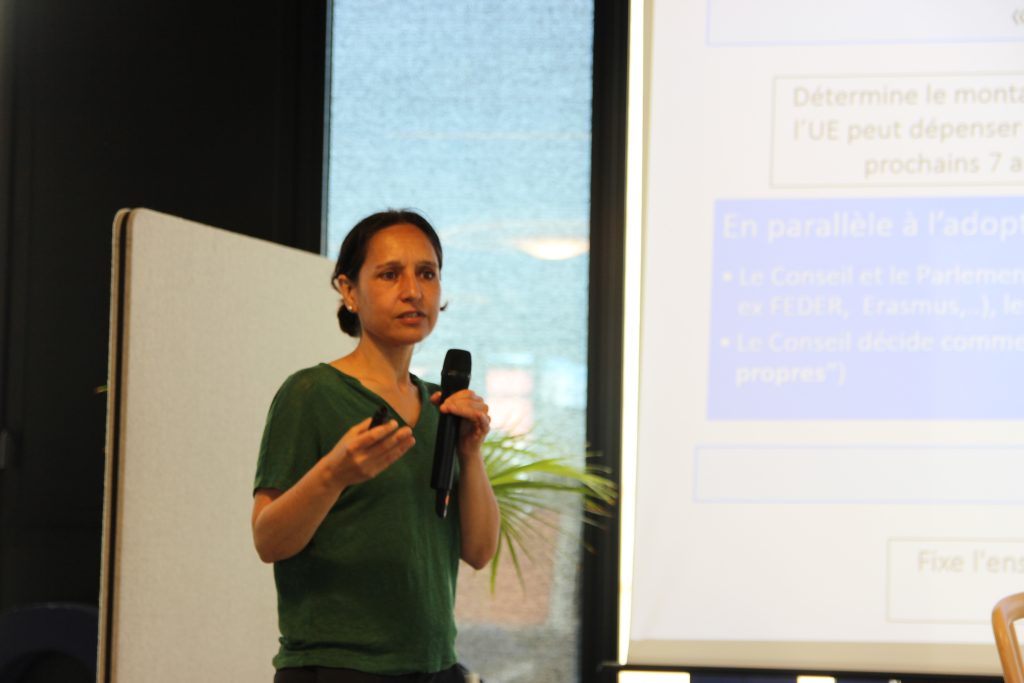
Eulalia Rubio, a senior researcher at the Jacques Delors Institute, has shed light on the issues surrounding the preparation of the European Union’s future budget for the period 2028–2034. Historically conceived as an instrument of redistribution and economic convergence between European territories, the EU’s Multiannual Financial Framework (MFF) is now increasingly becoming a tool for economic, industrial and geopolitical power. The proposal for the 2028–2034 MFF is thus based on three main priorities: a reorientation of budgetary priorities, greater flexibility in the use of funds, and a simplification of existing instruments. Whilst the overall size of the budget does not appear to be undergoing any major upheaval, its composition is changing significantly. Finally, Eulalia Rubio raised the issue of financing the European budget, with the development of new own resources to strengthen the Union’s financial autonomy. However, member States’ national contributions remain at the heart of European budget financing, which makes negotiations particularly complex.
The European budget debates are not merely technical: above all, they reflect a political vision of the Union’s priorities for the coming years. The future budget will therefore serve as an important indicator of Europe’s ability to respond to the economic, industrial and geopolitical challenges of the 21st century.
Is Europe doomed to dependence?
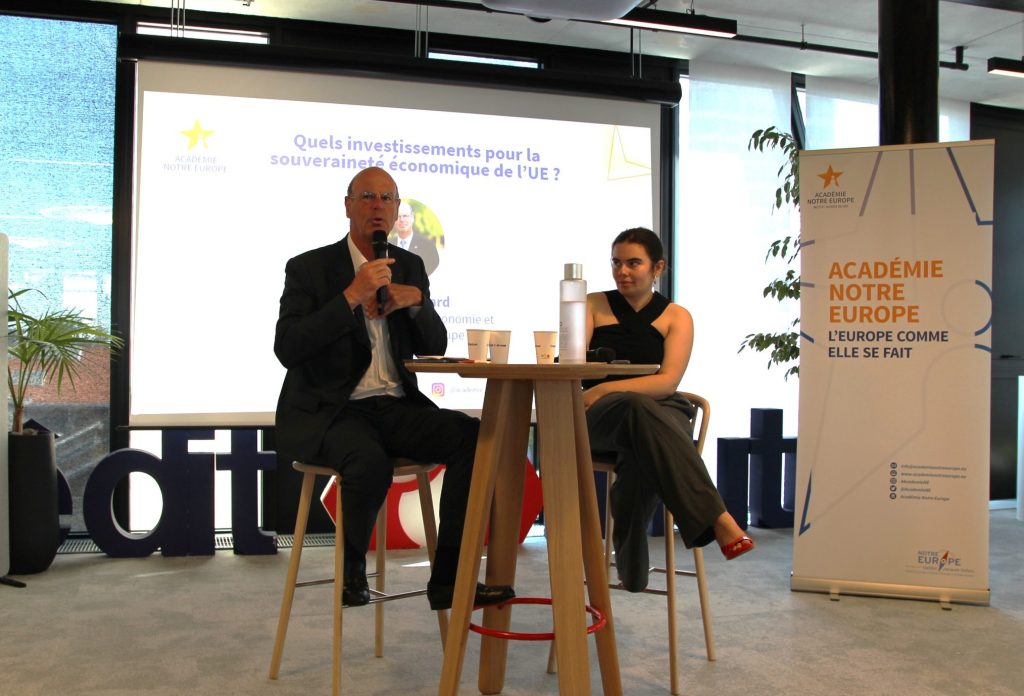
After presenting his essay L’Europe ne sera plus captive de Zeus, published on 6 May 2026, Éric Lombard painted a picture of a Europe at a crossroads, threatened by the resurgence of geopolitical power struggles and by its own lack of political will. Starting from a dystopian scenario set in 2050, the former Minister for the Economy argued that Europe’s main challenge is not economic but strategic: without military, energy and industrial sovereignty, the continent is doomed to dependence. Faced with US disengagement and the ever-increasing assertiveness of Russian and Chinese powers, he advocates the creation of a genuine ‘Europe of the Armed Forces’, capable of acting autonomously whilst remaining affiliated with NATO.
Beyond defence, Éric Lombard calls for a more flexible Europe, capable of moving forward with a few states when unanimity blocks collective action. He also advocates accelerating the Savings and Investment Union in order to mobilise more European capital in the service of the continent’s growth. Thus, his argument rests on a central conviction: Europe possesses the economic, industrial and human resources necessary to remain a global power, but its future will depend on its ability to transform this potential power into political assertiveness.
How do you embody Europe?
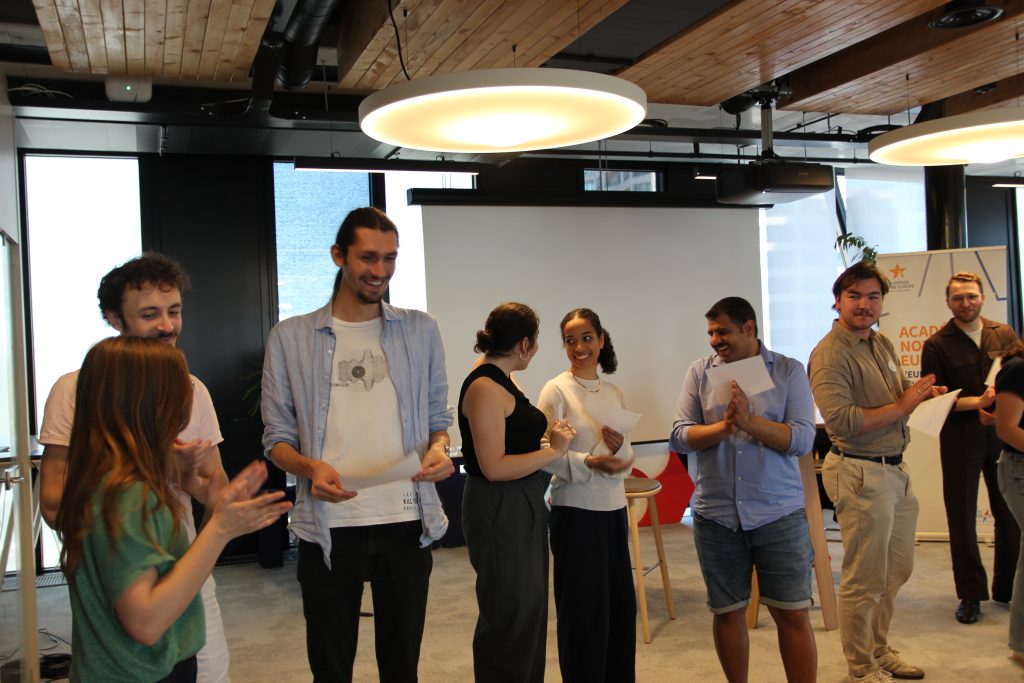
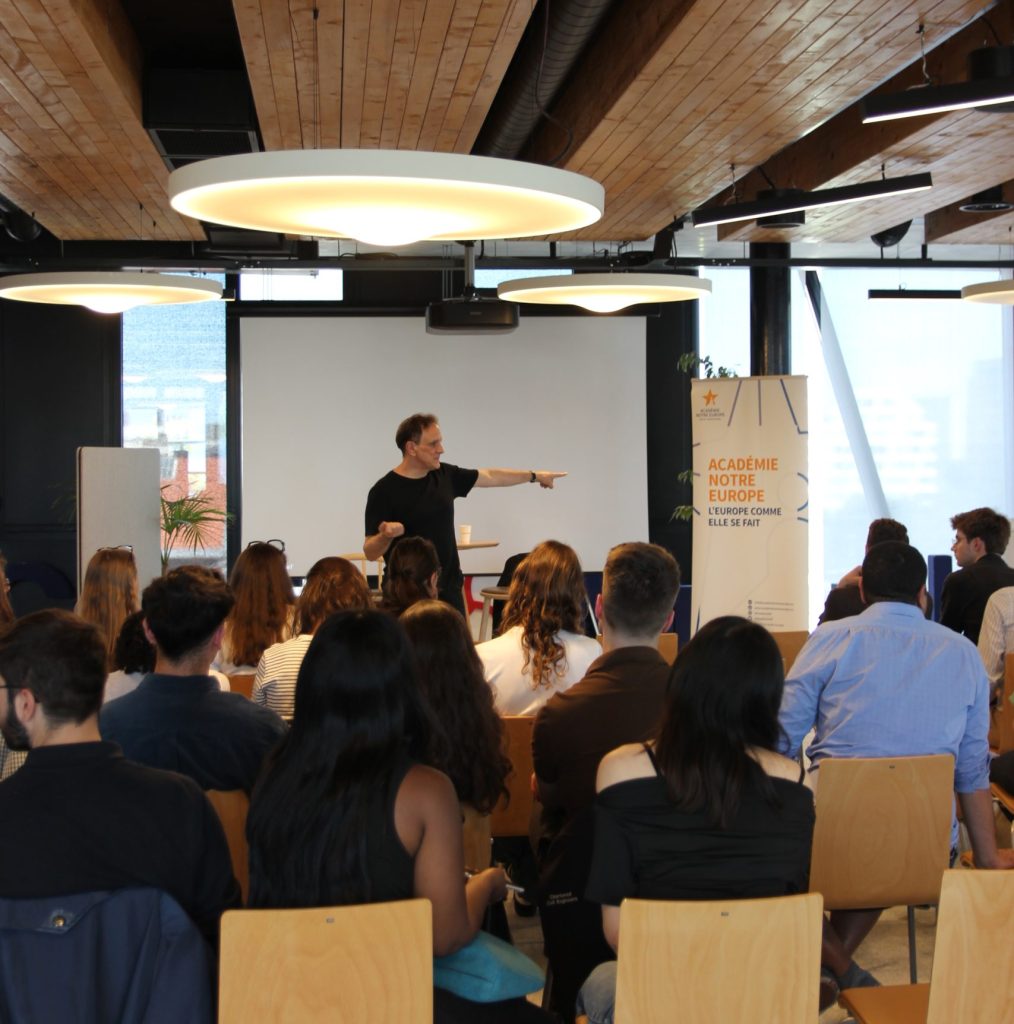
Stage director and composer Roland Auzet led an innovative workshop for the 2025–2026 cohort exploring the concept of European citizenship. Divided into small groups, the students first took part in a short discussion aimed at exploring their sense of belonging: do they feel French, European, Bulgarian or even Bordelais? This initial reflection served as a starting point for a more creative exercise.
Next, the participants were invited to embody, through dramatised scenes, their own vision of European citizenship. Through these artistic experiments, fuelled by discussion and collaboration, everyone was able to express their perception of Europe and share it with others. That is also what the Académie Notre Europe is all about: fascinating conferences and meetings in the morning, but also participatory workshops in the afternoon to experiment, debate, create and learn in a different way.
And that’s a wrap!
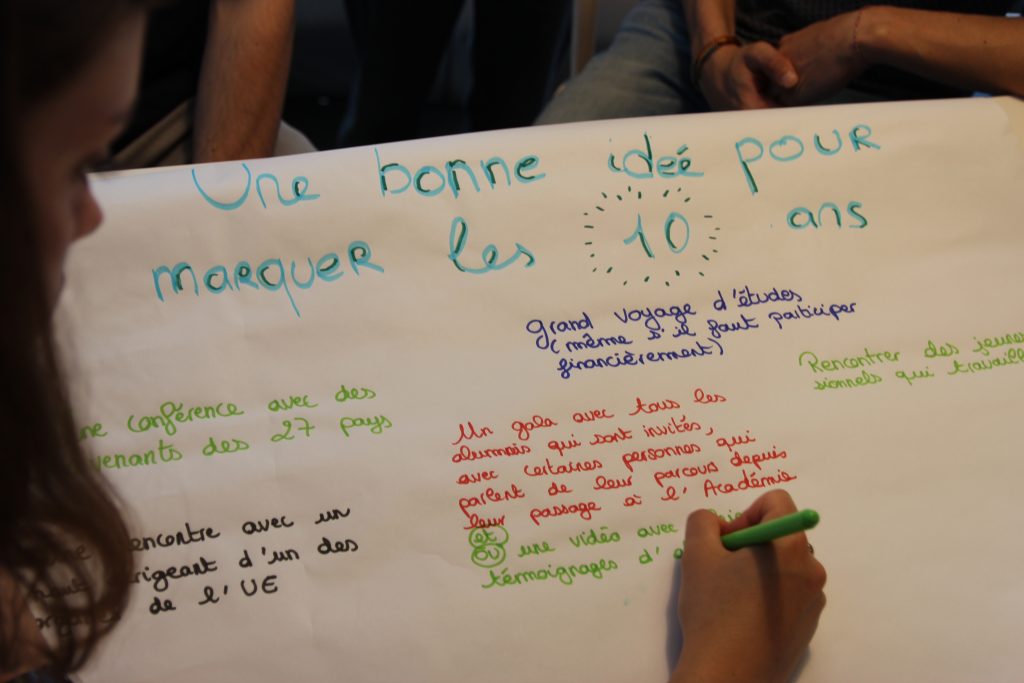
This is session before the end of the 25/26 Académie year was also an opportunity to hear feedback from the students in the cohort. For an hour, they discussed in groups the highlights of the year and the few areas for improvement and they also came up with some brilliant ideas for celebrating the Académie Notre Europe’s 10th anniversary next year!