
Green Europe – Looking back at our 4th session
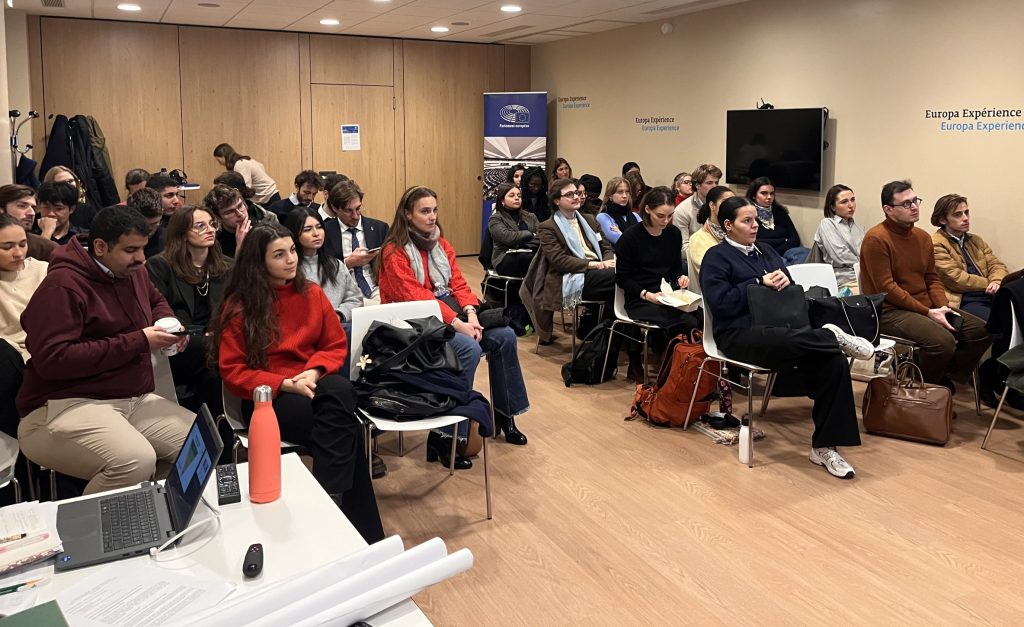
On 9 January, the 2025–26 promotion of the Académie Notre Europe gathered at the Europa Experience in Paris for its fourth session, dedicated to the energy and climate transition in the European Union.
A session eagerly awaited by all members!
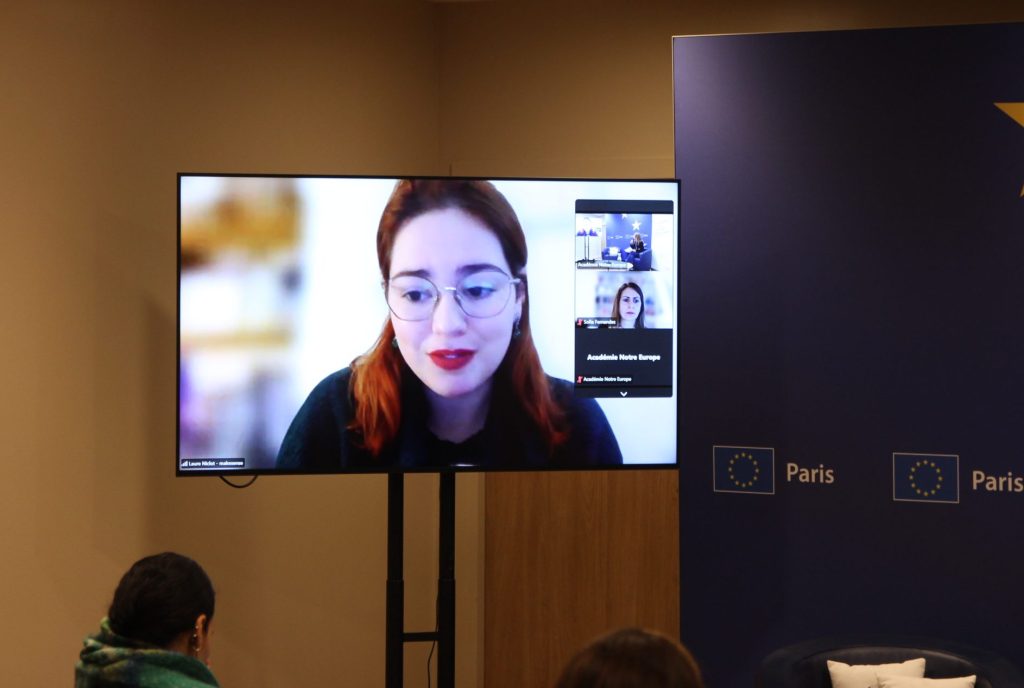
How, as young people, can we engage in the fight against climate change? What are our differences, and above all, how can we build bridges to make environmental engagement more accessible to everyone? These were the questions addressed by Laure Niclot during her intervention. A member of the European Economic and Social Committee and in charge of popular ecology issues at the NGO makesense, she shared her experience and reflections on today’s forms of climate engagement. She reminded participants that the ecological transition cannot succeed without social justice, nor without recognising forms of engagement that are often invisible but very real.
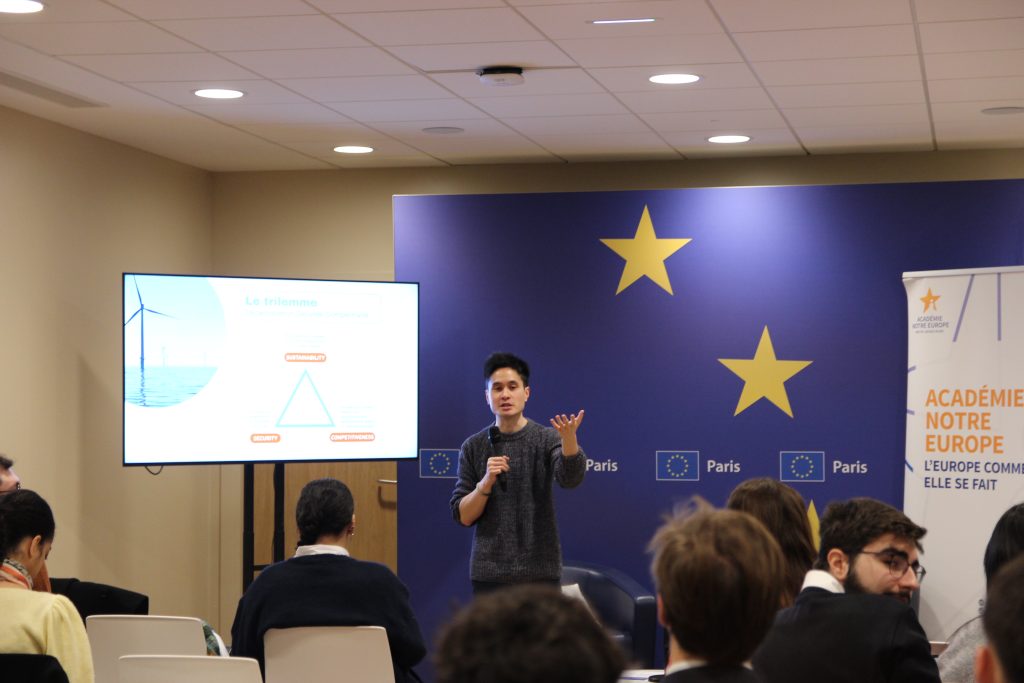
Next, Phuc-Vinh Nguyen, Head of the Energy Centre at the Jacques Delors Institute, explained how the EU is attempting to address a complex trilemma in the fields of energy and climate: balancing sustainability, energy security and competitiveness. While the EU introduced an ambitious regulatory framework in 2019 — the European Green Deal — the agenda is now shifting more towards competitiveness. Yet moving away from fossil fuels remains a strategic choice for Europeans, for our businesses, and for security reasons as well: Trump cannot stop the sun from shining, any more than Putin can stop the wind from blowing, he notably reminded us.
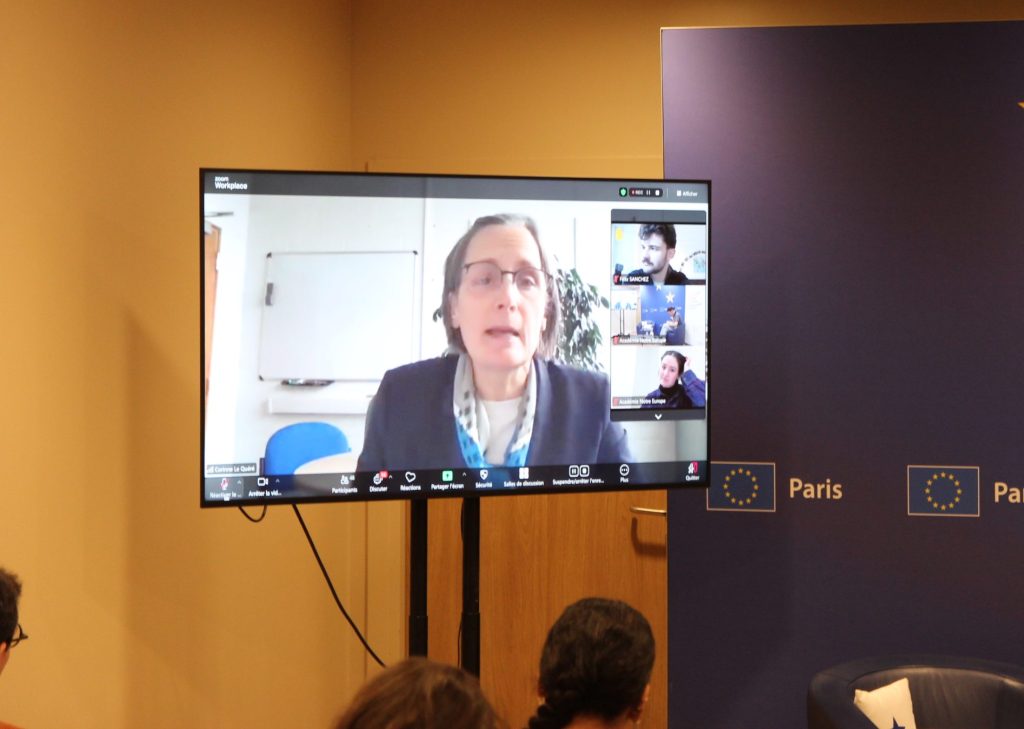
Corinne Le Quéré, climate scientist, Professor of Climate Change Science (and contributor to IPCC reports), and former President of France’s High Council on Climate, joined the session remotely from the UK to discuss environmental policies at a global level with the Academy’s members. She noted that greenhouse gas emissions have been increasing more slowly in recent years, even though current trajectories still point towards +2.5 to +3°C of warming. She also highlighted the effectiveness of decarbonisation policies and financing for more environmentally sustainable solutions, drawing for example on the UK’s energy transition. Nevertheless, the key challenge remains acceleration: going beyond the minimum commitments set by certain international treaties and scaling up efforts in the deployment of renewable energies, electrification, low-carbon infrastructure, and more.
All these contributions helped prepare the young participants for the day’s challenge: a mini Citizens’ Climate Convention. Stay tuned to discover their proposals very soon!
Partners
- French Ministry of Europe and Foreign Affairs
- Hippocrène Foundation
- Europa Experience - Paris