European Defense and Enlargement: Looking Back at Our 5th Session
On Friday, February 13, the class of 25/26 met again for the Academy’s fifth session on the theme of European defense and enlargement. With war still raging on the European Union’s doorstep and the historic alliance between the EU and the United States appears significantly strained by threats from the Trump administration, particularly regarding Greenland, Europeans now seem willing to re-engage in a common defense policy. But how can the ambitions expressed on this issue, closely tied to each Member State’s sovereignty, be translated into concrete action?
What can Europeans expect from the Munich Security Conference ?
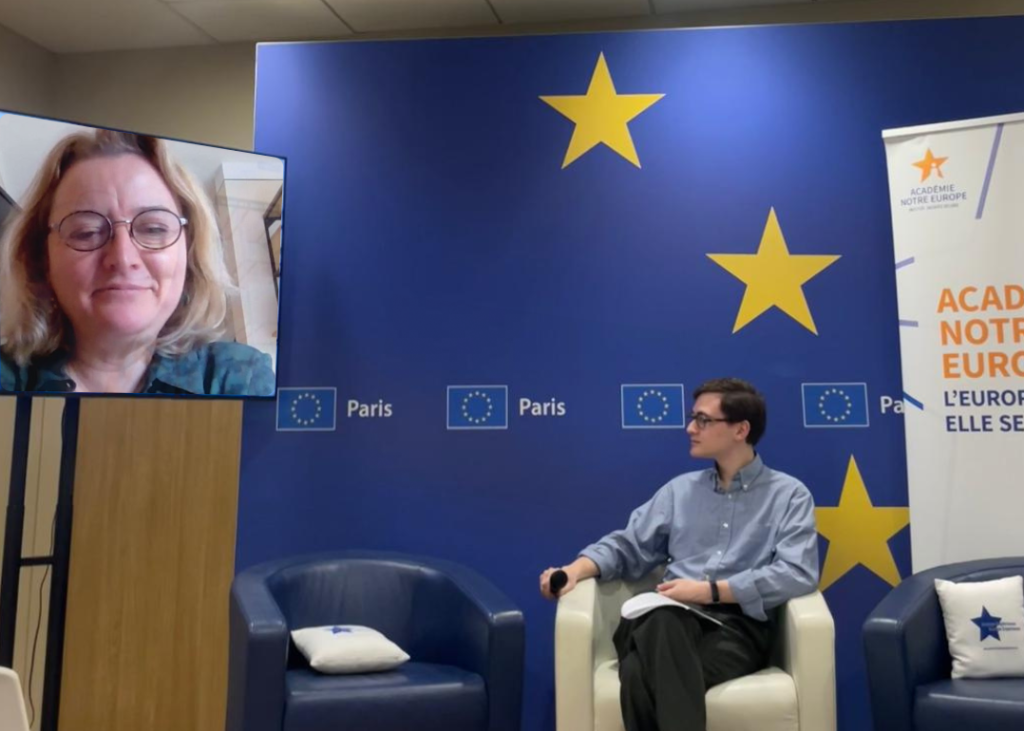
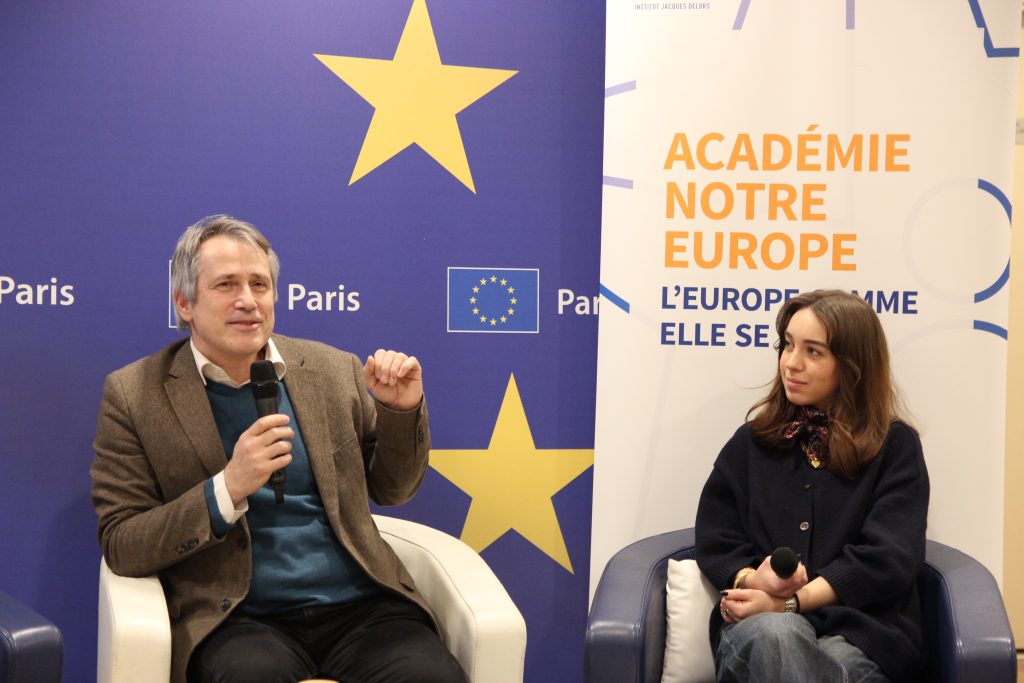
The discussion began with Sylvie Matelly, speaking live from the Munich Security Conference. She shed light on the main challenges of the 2026 edition, which was highly anticipated in an extremely tense international context.
The 2026 edition took place amid a climate of major uncertainty: transatlantic relations are fragile, the war in Ukraine is ongoing, and the Middle East is facing persistent tensions and a multiplication of regional conflicts. Added to this is the end of the New START treaty limiting the proliferation of nuclear weapons between the United States and Russia.
According to Sylvie Matelly, the European Union must rethink its strategy. The time for systemic dependence on the United States is over; instead, the EU must adopt a more autonomous vision, particularly in terms of security.
European Defense: Between Political Will and Industrial Capabilities
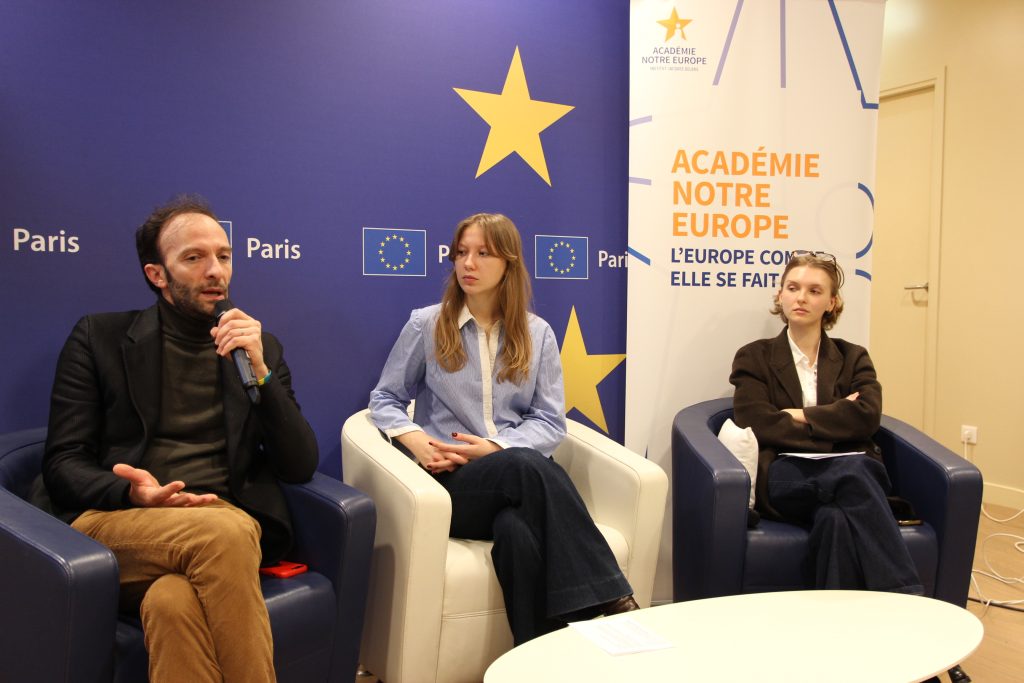
The discussion continued with Louise Souverbie and Pierre Haroche, who addressed very concrete issues: EU rearmament and the European defense industry.
Since the start of the war in Ukraine, European priorities have evolved, particularly in the industrial sector.
However, as Louise Souverbie emphasized, rearmament does not automatically mean Europeanization. European industrial supply has long been calibrated for a context of peace, while demand for armaments remains largely national.
Pierre Haroche stressed the need to invest in new capabilities adapted to contemporary conflicts: drones, anti-drone systems, air defense, and missiles. For these “consumables,” a European industrial base and a common budget make perfect sense.
Finally, the question of a “European preference” in defense equipment procurement was raised. While this idea is primarily aimed to strengthen the EU’s strategic autonomy, it remains divisive among Member States and highlights the tensions that can exist between common ambitions and national interests.
Toward an Enlarged Europe?
The morning concluded with a presentation by Lukáš Macek on a key issue: the enlargement of the European Union.
The question of EU enlargement has returned to the forefront, particularly since the start of the war in Ukraine. Faced with numerous membership applications and various geopolitical imperatives, the Union must find a solution.
Among the options discussed is that of gradual accession. This model would help address the urgency of the situation while limiting the risks of overly rapid integration.
This final segment allowed the Academy’s youth participants to gain a comprehensive perspective and helped them understand how closely defense and enlargement issues are linked. In the coming years, the European Union will have to make structuring decisions on both fronts.
Visit to the Senate and Exchange with Xavier Moal
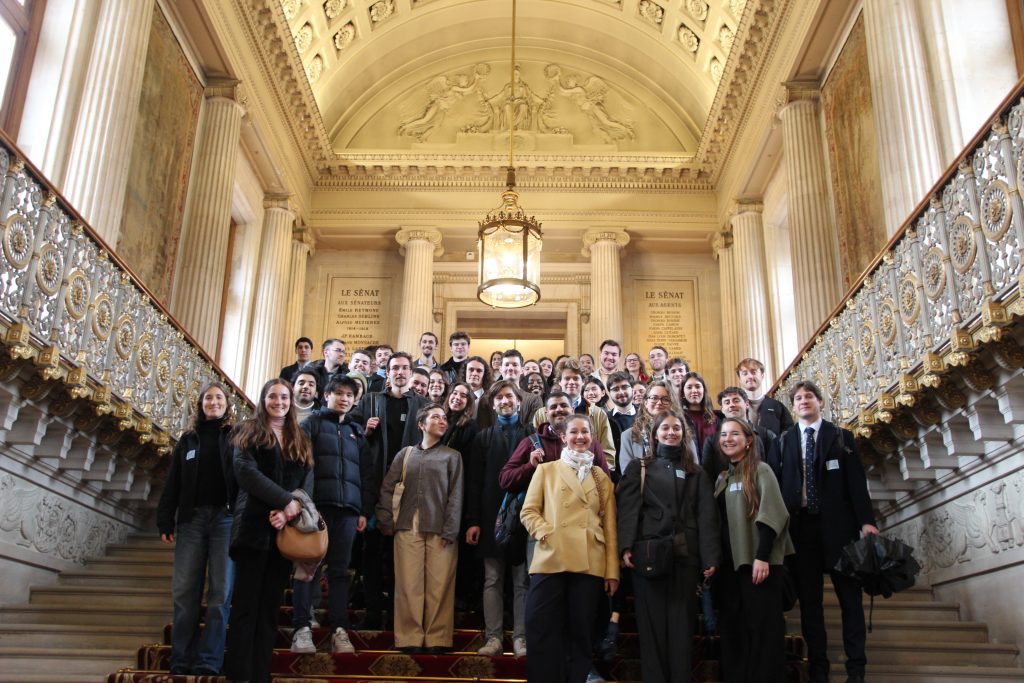
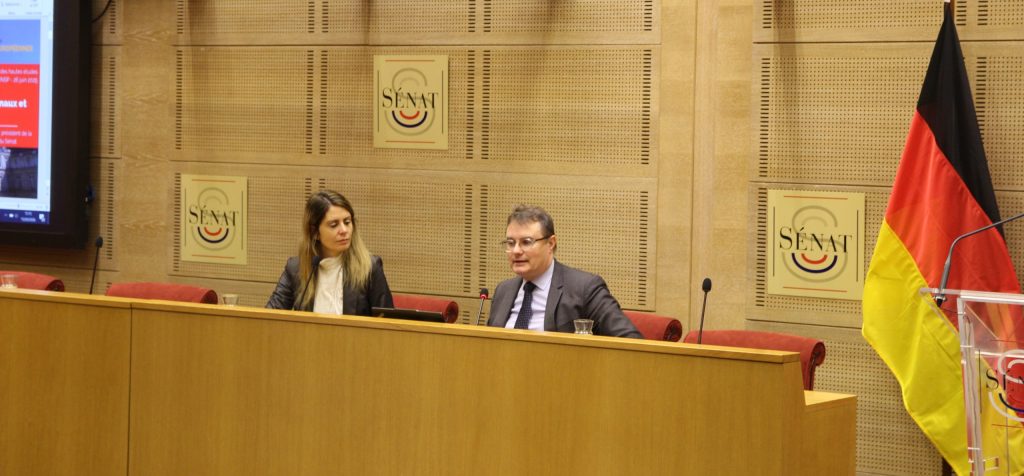
The session continued with a visit to the Senate, followed by a discussion with Xavier Moal, Head of the European Affairs Committee Secretariat at the Senate. The students at the Academy were able to discover and experience firsthand a fundamental institution where the country’s political and legislative decisions are made and learn how it addresses European issues.
Partners
- Open Society Foundations
- French Ministry of Europe and Foreign Affairs
- Hippocrène Foundation

- Europa Experience Paris

- French Senate