
A look back at the European Institutional Simulation
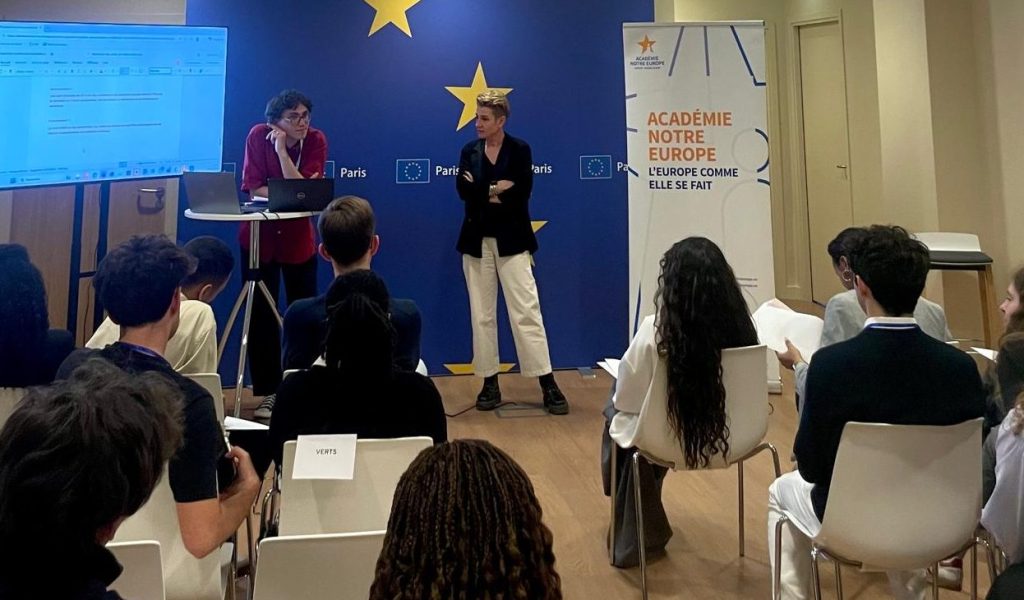
As part of European Youth Week, on Wednesday, April 29, the Academie Notre Europe, in collaboration with Cité des chances, organized a European institutional simulation.
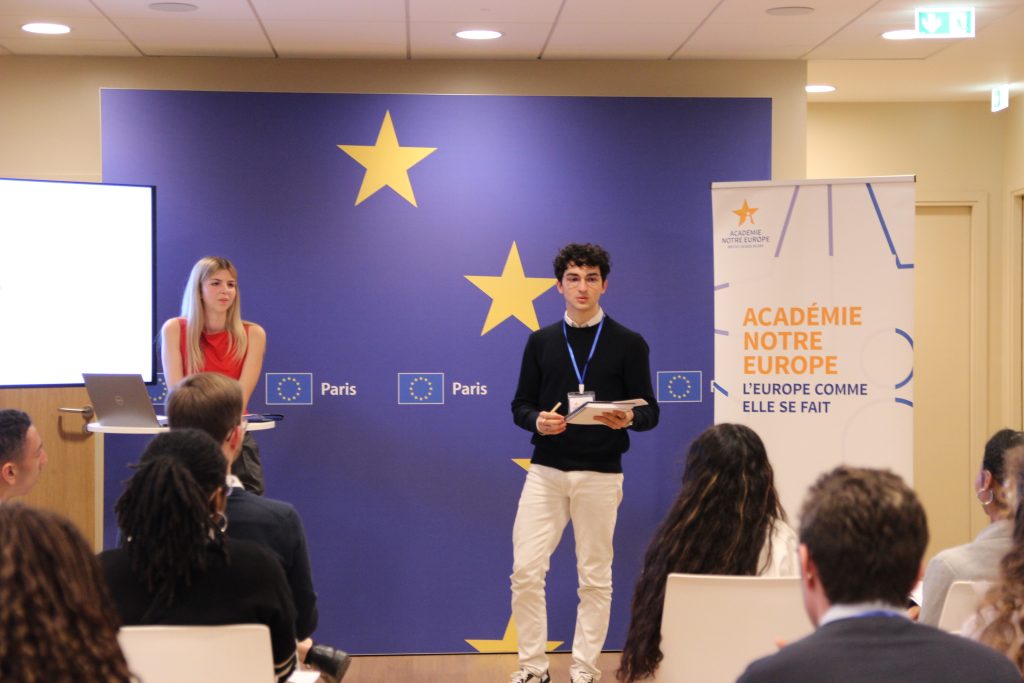
Intended for an audience with little or no knowledge of the European Union, this simulation aimed to provide a hands-on, immersive introduction to how European institutions work, by letting participants step behind the scenes.
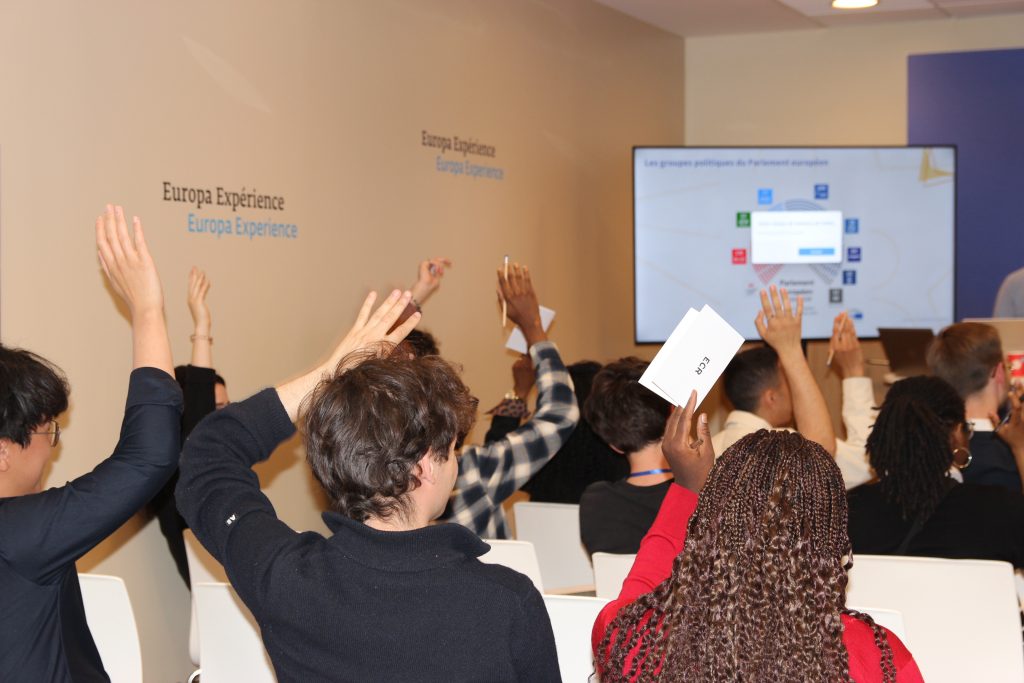
We were welcomed by Europa Experience for this particularly enriching afternoon. The participants, who came from a variety of backgrounds, began the day with a tour of the venue to familiarize themselves with the European Union and its institutions.
At 2 p.m., they drew lots to determine their roles: each participant was to play the part of a Member of the European Parliament belonging to one of the eight political groups currently represented in the Parliament: EPP, S&D, Renew, ECR, Patriots, The Left, the Greens, and ESN. The distribution of roles reflected the actual balance of the European Parliament.
From that point on, the participants stepped into their roles until the end of the simulation, with three objectives: to debate, negotiate, and vote.
A Proposal on Decarbonizing the Transportation Sector
After a brief introduction to the simulation process, the participants reviewed the European Commission’s proposal, which they were to examine.
The text focused on decarbonizing the transportation sector and centered on three main measures:
- ending the sale of internal combustion engine vehicles by 2035,
- creating a €100 billion European fund to support vulnerable households,
- and setting a target of 80% battery recycling by 2034.
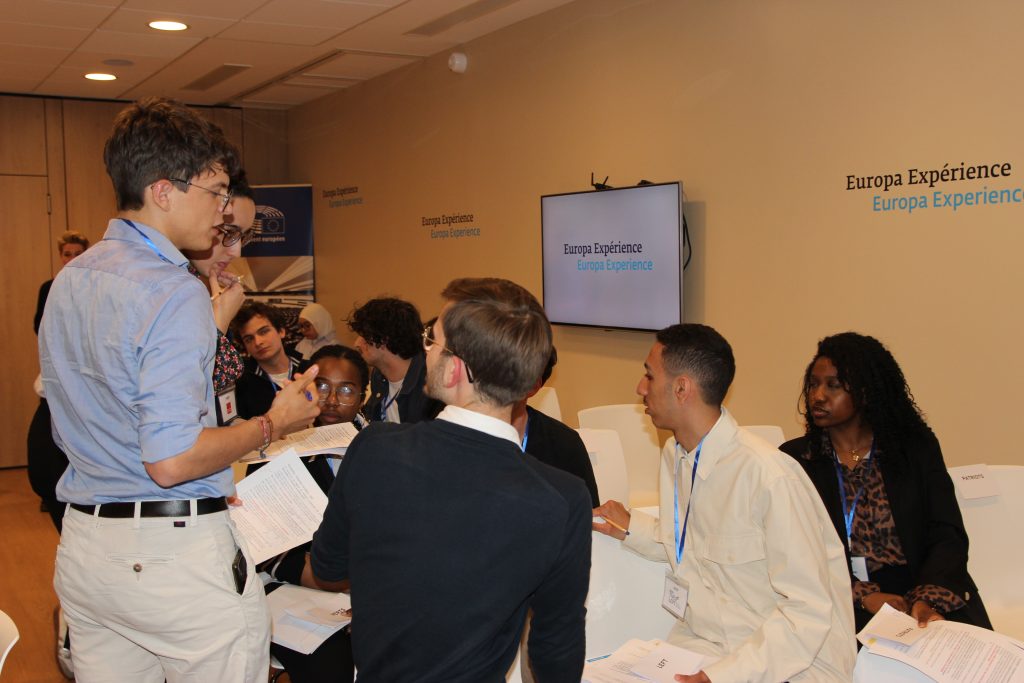
Debate, negotiate, form alliances?
Participants first had time to work in groups to define their positions and consider possible amendments. Although this phase was initially intended to remain internal to each political group, the first alliances quickly emerged.
During the speeches, positions were reaffirmed. Some groups advocated for goals even more ambitious than the 2035 deadline, while others warned of economic risks, particularly increased dependence on China or the destabilization of the European automotive industry.
The first amendments, particularly those regarding the phase-out of internal combustion engine vehicles, sparked intense debates and revealed clear dividing lines between the groups.
Even during the break, discussions continued over coffee and pastries, a testament to the participants’ commitment.
An amended text, a rejected text?
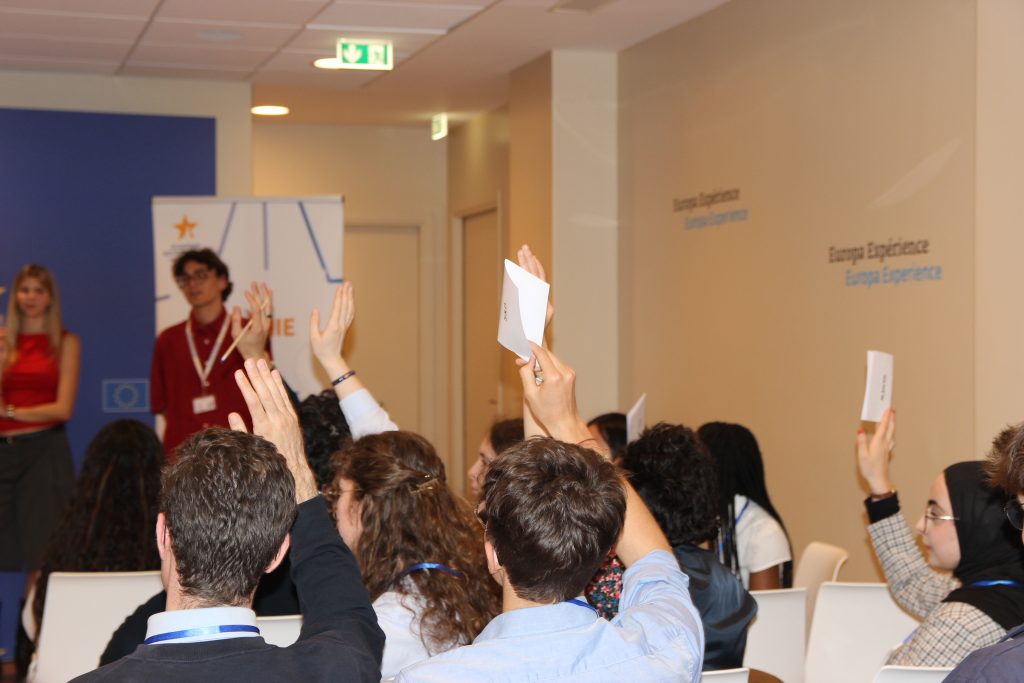
The voting phase held its share of surprises: no amendments to Article 2 were adopted, and the article was ultimately rejected. However, far from stalling the process, the participants were able to bounce back. New amendments, introduced in Article 3, made it possible to reinstate Article 2.
The following articles were adopted after negotiation, although some participants mentioned a few political “betrayals”
Just as negotiations seemed to be over, a new challenge arose: the Council of the European Union had also amended the text. Participants therefore had to enter a new phase of negotiation, this time defending not their political group but the Parliament’s overall position.
Despite this shift in perspective, the discussions were constructive and led to a compromise. The final text was ultimately adopted.
A discussion with the European Parliament in France.
To close the simulation, participants had the opportunity to speak with Laila Walm from the European Parliament, who took the time to review the simulation and answer their many questions.
Our Partners:
- Co-funded by the EU

- Europa Experience

In collaboration with:
- Cité des chances