Second session of the Académie Notre Europe : Europe in the world
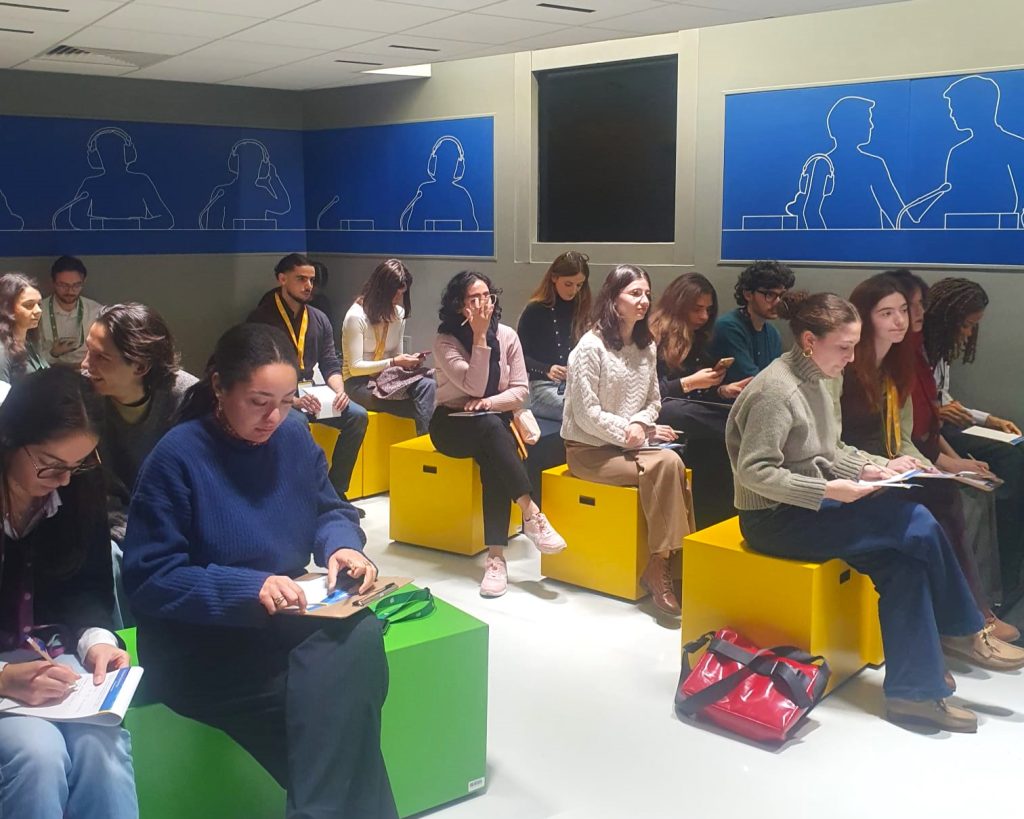
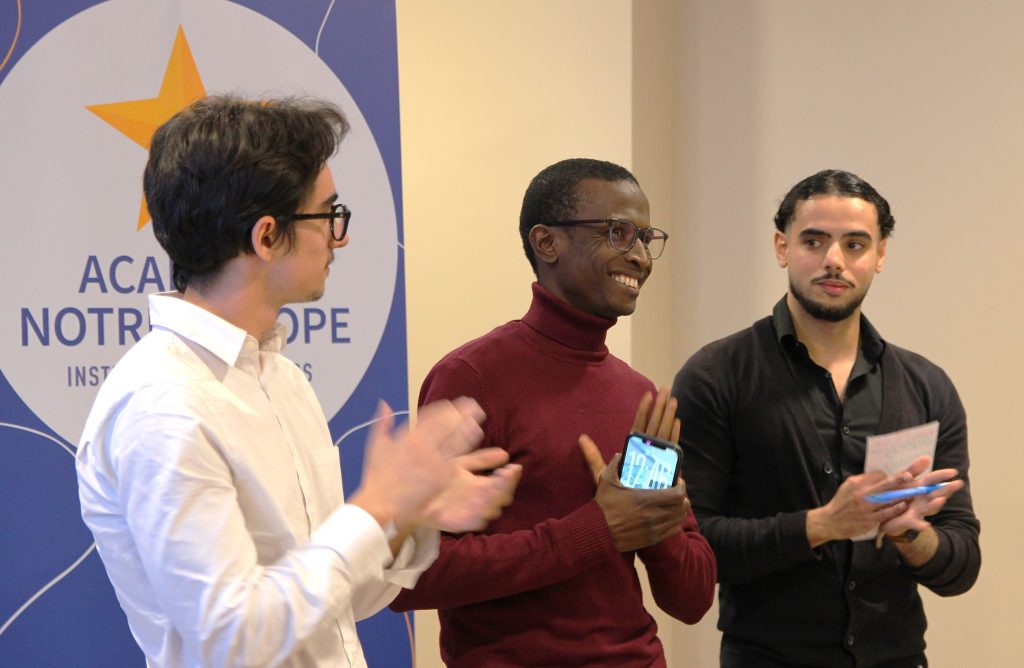
On 13 November, the 10th intake of the Académie Notre Europe gathered at Europa Expérience in Paris for the second session of its 2026-2027 programme: ‘Europe in the world’.
On this occasion, around a hundred young people came together for a day of discussion and reflection on the European Union’s place in a rapidly changing world, amidst a trade war with China, complex relations with the United States, the renewal of the partnership with Africa and the questioning of the international order.
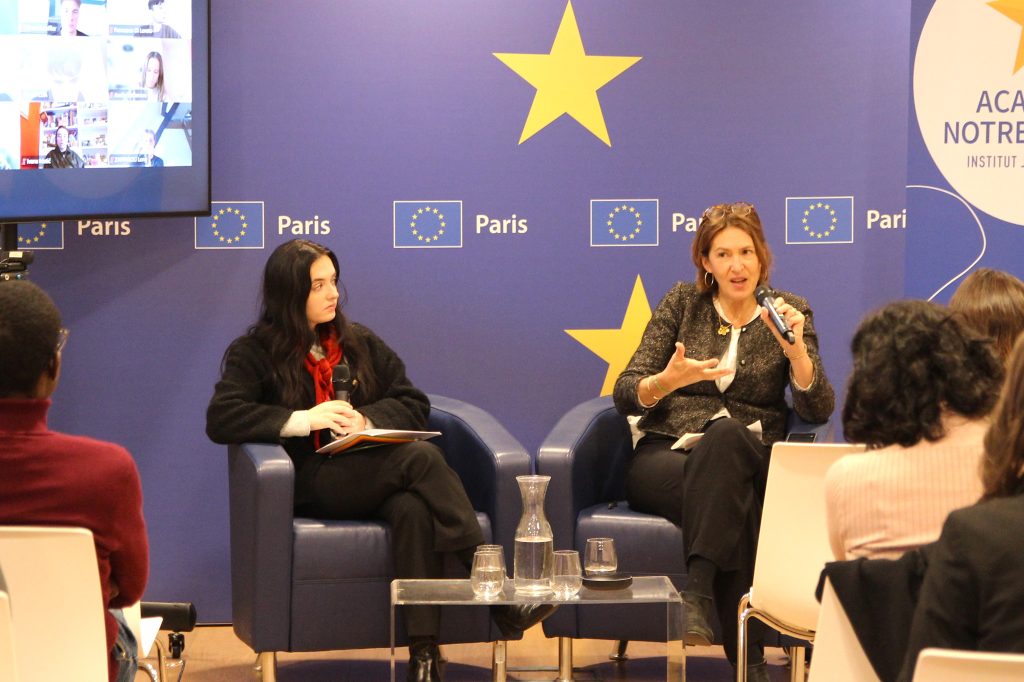
The second session of the annual programme began with Elvire Fabry, director of the ‘Trade and Economic Security’ programme at the Jacques Delors Institute. She pointed out that China has become a veritable hub of innovation, as a supplier of the machinery and components on which other global industries depend. In her view, Europe must draw inspiration from the Japanese concept of ‘strategic indispensability’ and aim for leadership in critical technology niches, an issue that is set to dominate the upcoming political agenda, starting with the 2027 French presidential election.
She also referred to the CPTPP (Comprehensive and Progressive Agreement for Trans-Pacific Partnership). Together with the EU, its members account for around a third of global production and trade. Whilst WTO reform remains stalled, this closer cooperation could preserve trade based on common rules rather than on a balance of power.
Whilst China is reshaping the balance of global trade, the question of partnerships also arises at the level of a neighbouring continent: Africa, with which the European Union shares a common history and geography, and with which relations are also set to be revitalised.
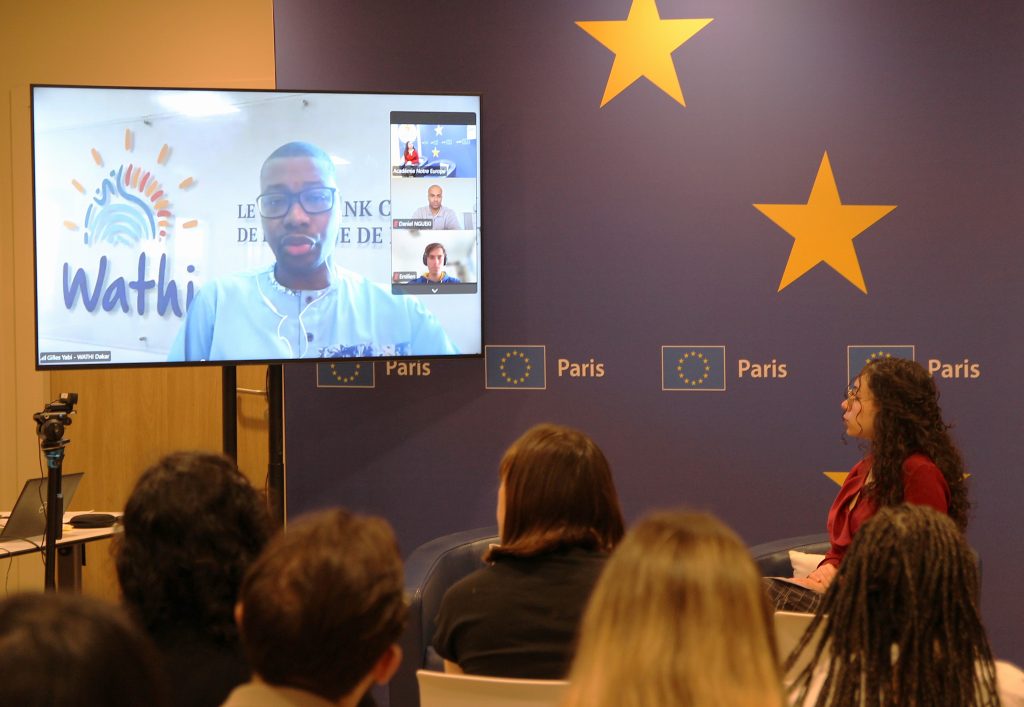
Gilles Yabi, a political analyst and director of the citizen-led think tank WATHI, presented an assessment of the 26-year partnership between the African Union and the European Union. On this occasion, he highlighted the geographical proximity and the historical nature of the link between the two continents. In his view, it is necessary to take the colonial history into account when renewing relations.
He highlighted the European Union’s role in trade within Africa, development aid and foreign direct investment, whilst also noting the growing influence of China and Russia on the continent.
He called for Africa to be “a player rather than merely a beneficiary” of European aid and for it to continue to assert itself strategically, in particular by diversifying its partnerships.
That left us to address the key question of the morning: in this world in crisis, what role and what influence does Europe itself have?
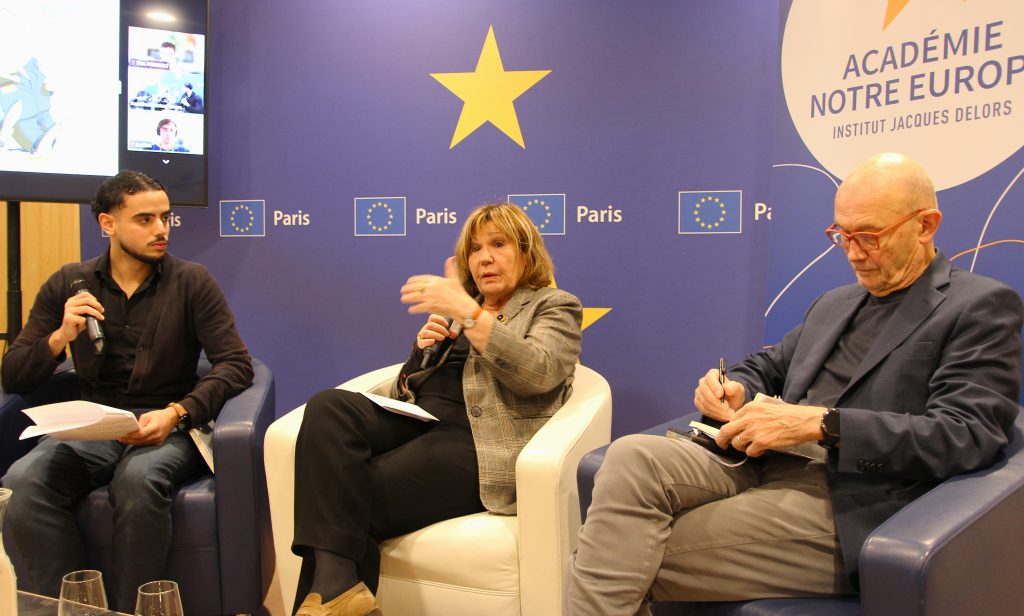
Nicole Gnesotto, Vice-President of the Jacques Delors Institute, and Pascal Lamy, coordinator of the Jacques Delors think tank network chaired the last debate of the morning. They pointed out that the three founding principles of the European Union in 1950 – namely, ‘no more war, trade for peace, and trust in the United States’ – have now been turned on their head. Europe is, however, adapting, from the coalition of the willing to the partnership with Canada, but remains torn: it is preparing for the Russian threat whilst not wishing to build a defence system that is too independent of the United States and NATO.
For them, the challenge is to ensure that the ‘European option’, a sustainable democratic, social and environmental model, remains a viable alternative to the United States and China. This is why Europe must become stronger. Despite its vulnerabilities (demographic decline, weak growth), they highlighted its strengths, such as its capacity for innovation, and called for a common economic strategy on immigration.
The afternoon featured two talks that were as complementary as they were inspiring.
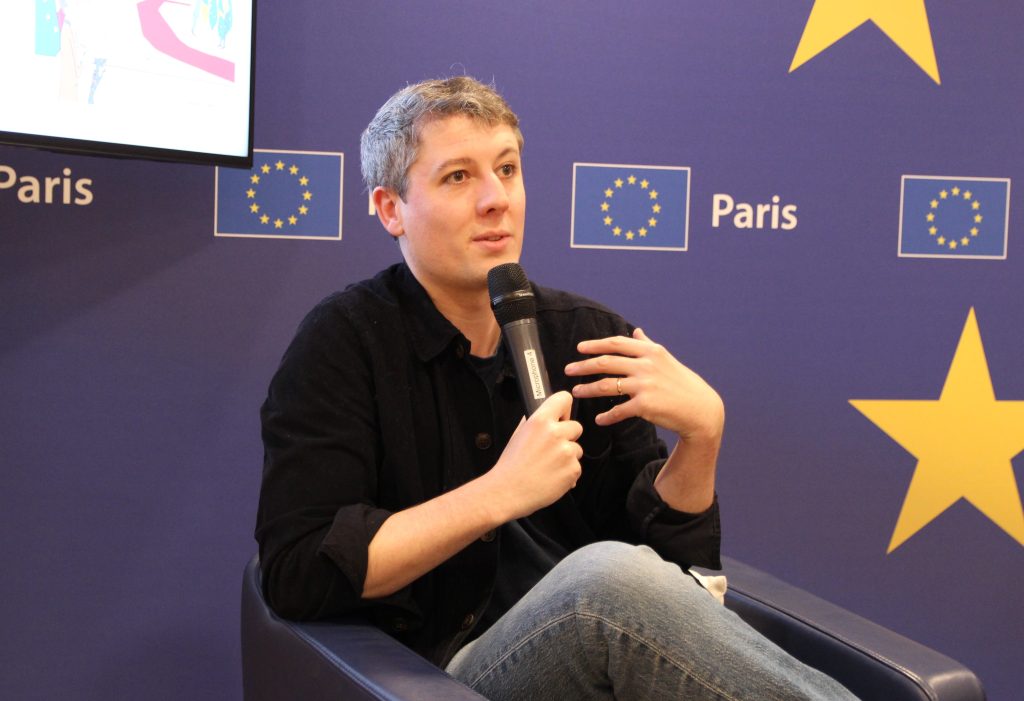
Antoine Angé, known as Kokopello, began by reflecting on the journey behind his comic La tour de Babel : voyage au cœur du grand bazar européen, the result of a year and a half spent immersed in the European institutions. He explained how comics could help reconcile citizens with the complexities of how the EU works, by making it more accessible, whilst sharing, with humour, the anecdotes that had surprised him most during his time observing the institutions.
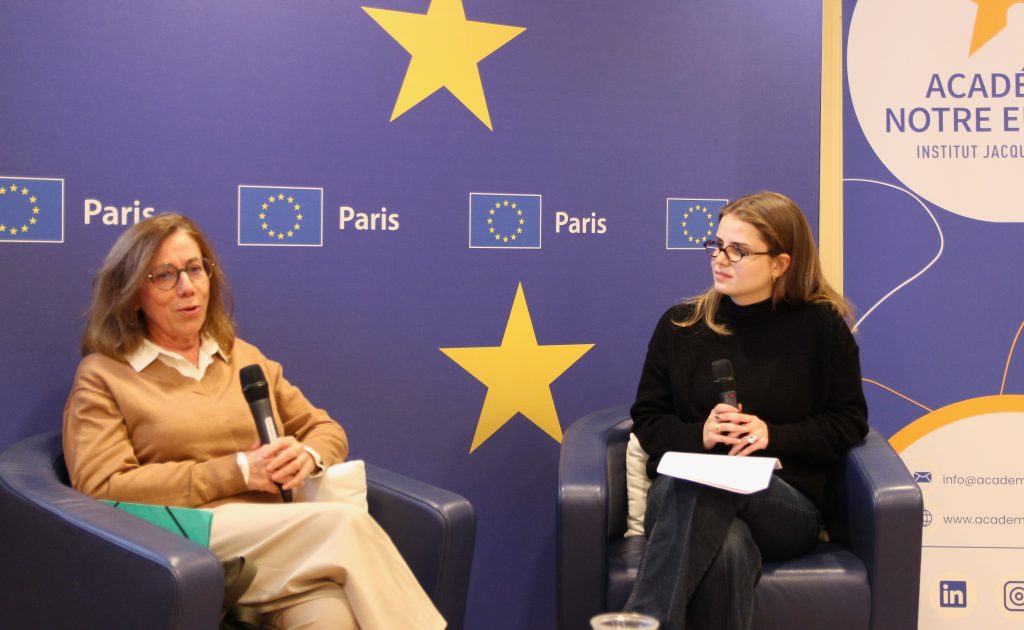
Corinne Brunon-Meunier, for her part, offered an insider’s perspective on the diplomatic profession. She recounted her experience in Croatia, alongside her husband, who is also a diplomat: the couple took turns in their posts every six months, an unusual arrangement that speaks volumes about the realities of diplomatic life. Above all, she emphasised, against a geopolitical backdrop marked by severe tensions, just how essential the role of diplomacy remains in fostering dialogue, preventing crises and building peace.
The second group of young people from the Academy, meanwhile, took part in a European Parliament simulation. Divided into political groups, they had the opportunity to step into the shoes of MEPs and work on two directives: online participation and climate-friendly food.
Political group meetings, parliamentary committees, political communication, negotiations, amendments, voting, conciliation meetings…; the participants gained a comprehensive overview of how European legislation is drafted.