It’s been 10 years already : a look back at the inaugural session of the Académie’s 2026 – 2027 programme
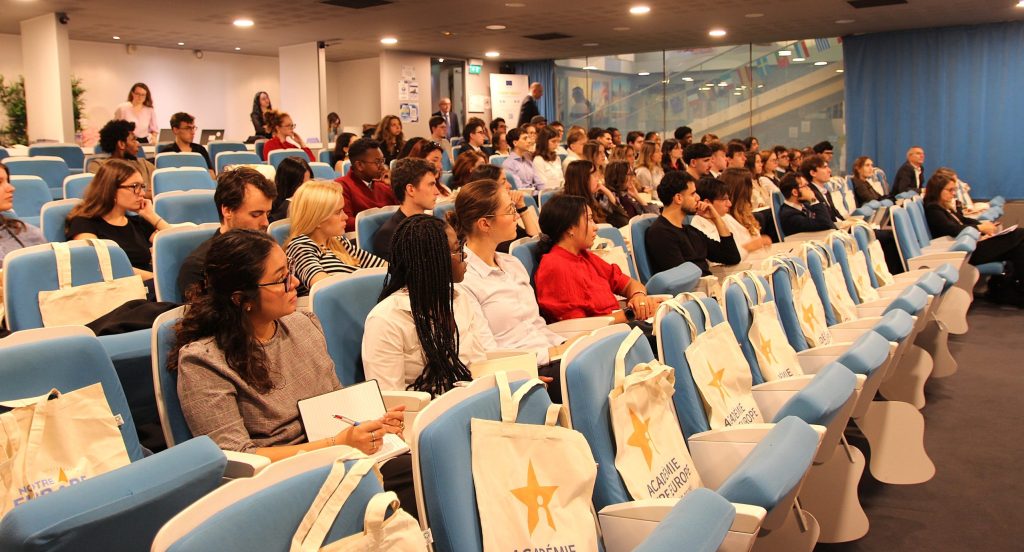
On October 16, the 10th class of the Académie Notre Europe officially launched its 2026–2027 program at the Maison de l’Europe de Paris – Europe Direct.
On this occasion, 118 young people from all over France (and even Europe !) gathered for a first day of discussion and reflection on political and institutional Europe, its major strategic priorities, and the challenges it faces.
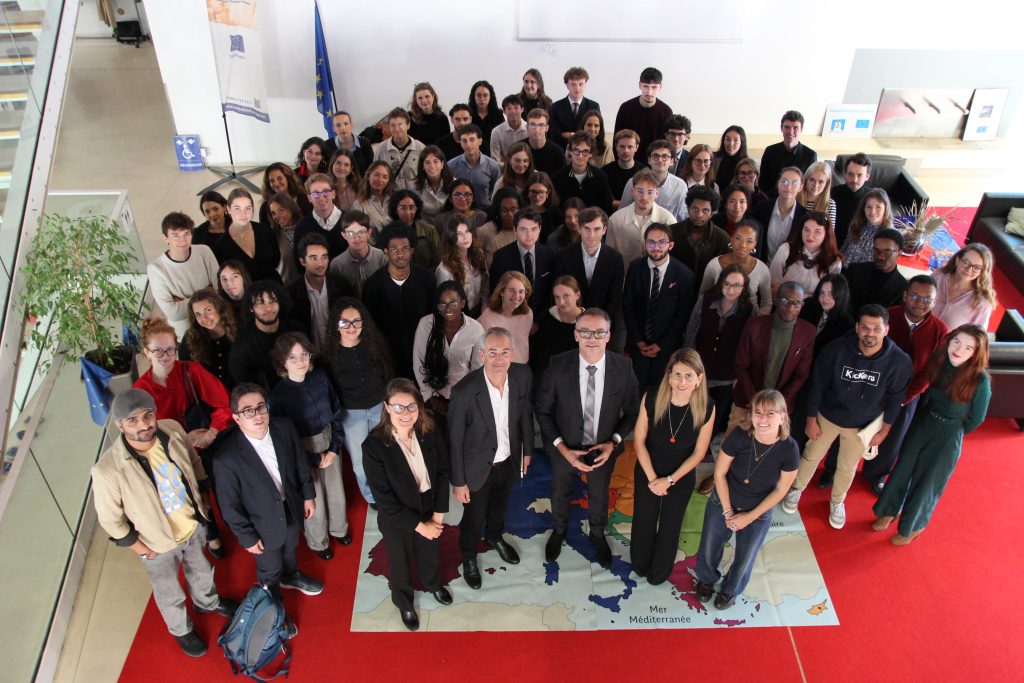
This inaugural session marked the beginning of a year of training and European commitment centered on the theme of values, at the heart of the Community project and its future. Against a backdrop of growing geopolitical tensions and with an upcoming election year in France as well as in Europe, this session highlighted the need to unite around a shared project led by youth, as well as the imperative to strengthen our commitment to Europe.
Thinking About Europe in the Face of Global Geopolitical Upheaval
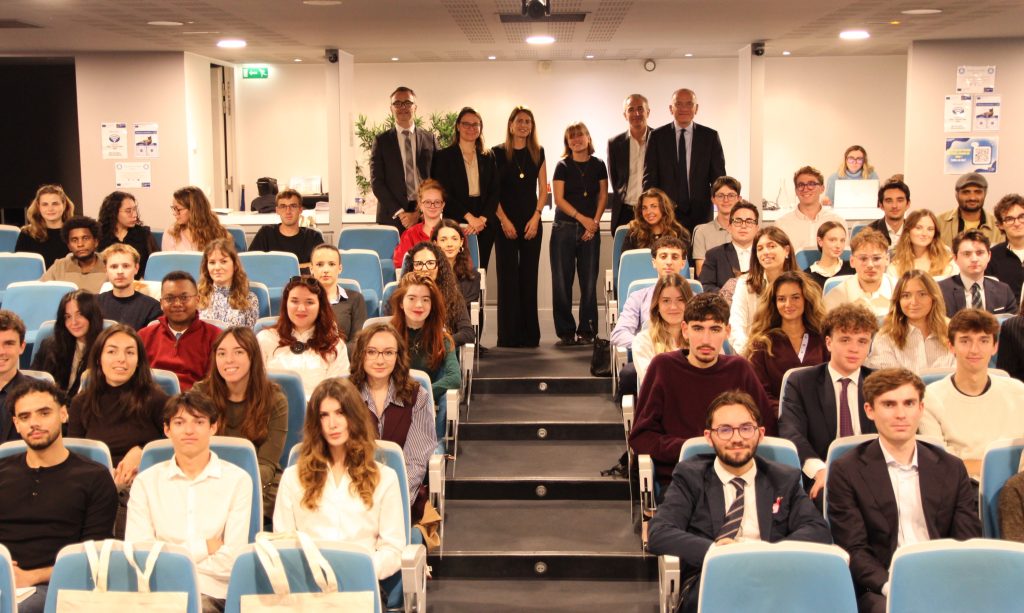
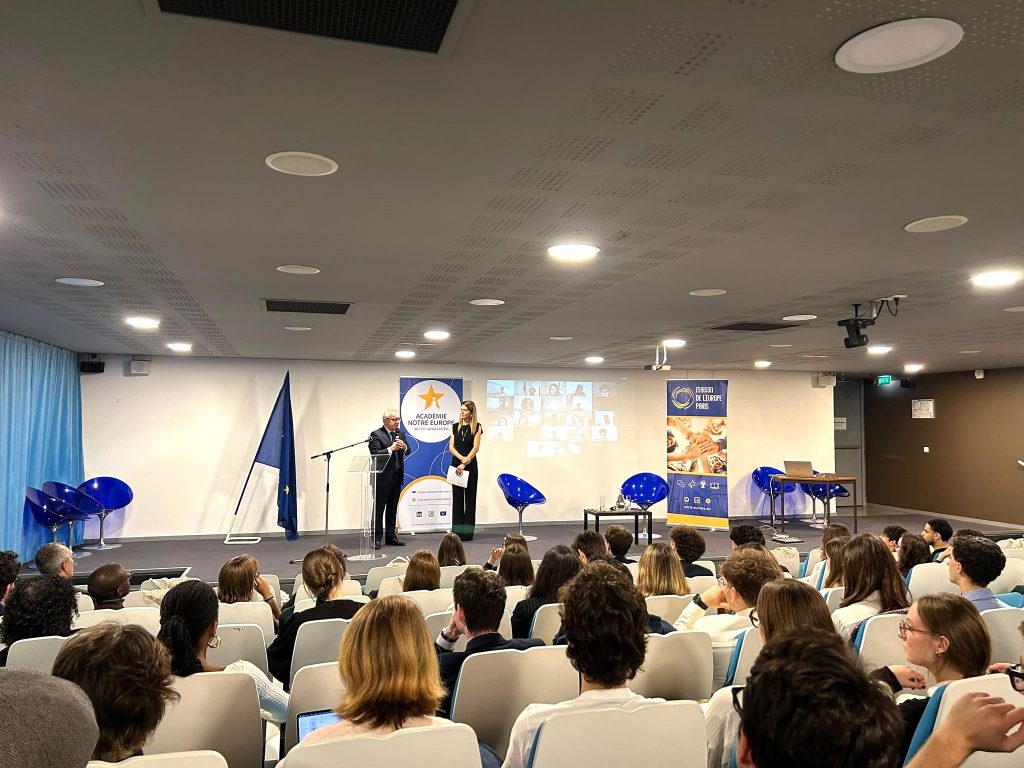
The day opened with a welcome address by Michel Derdevet, President of the Maison de l’Europe de Paris, followed by introductory remarks from Sofia Fernandes, Director of the Académie Notre Europe and Deputy Director of the Jacques Delors Institute.
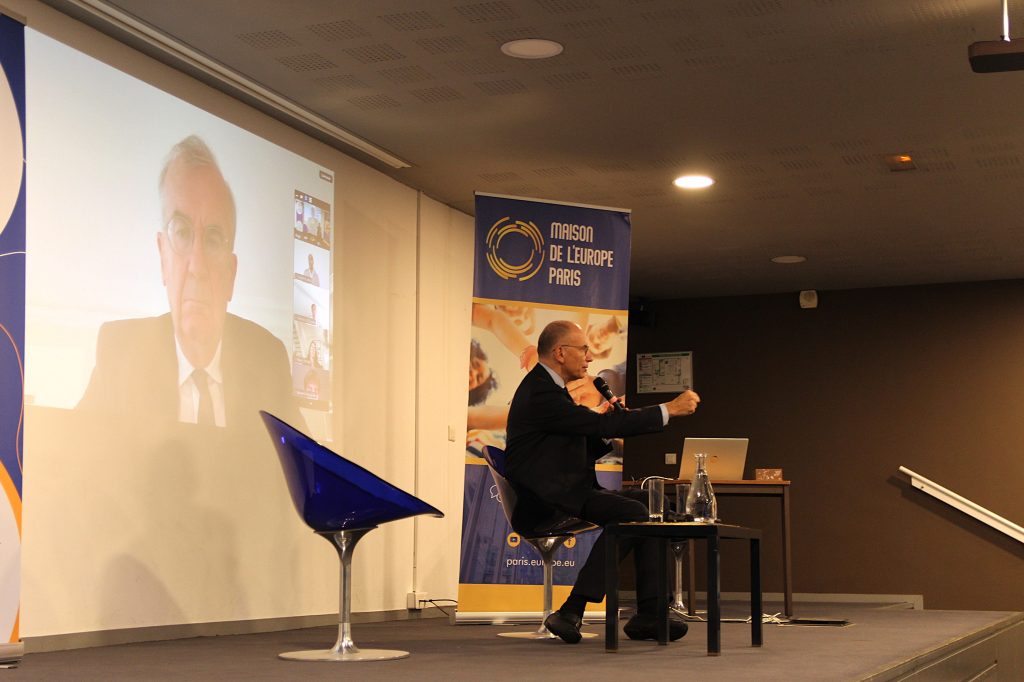
The conferences began with a discussion on the economic, political and geopolitical challenges facing the European Union today, bringing together :
- Enrico Letta, President of the Jacques Delors Institute and former Prime Minister of Italy ;
- François Villeroy de Galhau, former Governor of the Banque de France and President of Apprentis d’Auteuil.
European Sovereignty Put to the Test by Interdependence
For Enrico Letta, Europe is undergoing a period of profound transformation that requires it to rethink its bearings and its place in the world.
“We are going through a period of major change […]. Europe now finds itself in need of re-establishing its bearings. Today, sovereignty is synonymous with interdependence,” he stressed.
Referring to the case of Nicolas Guillou, a French judge at the International Criminal Court who has been subject to US sanctions since 20 August 2025, Enrico Letta pointed out that when a European actor relies on infrastructure and platforms controlled from abroad, its ability to act autonomously may be called into question.
Paralysis and Discord : Two Risks for Europe
François Villeroy de Galhau, for his part, summed up Europe’s current challenges in two words :
“If I had to sum up Europe’s problems today in two words, I would speak of paralysis and discord. Paralysis as a form of inaction or inhibition in the face of shocks, and discord as a reflection of divisions among Europeans”.
These two phenomena can hinder growth, slow innovation and weaken the European Union’s collective ability to defend its interests. However, he also highlighted several reasons for optimism, including European unity in supporting Ukraine, the resilience of economic growth in the face of geopolitical shocks, and prospects for renewed Franco-German cooperation on the transition to electric vehicles.
Understanding European Institutions to Understand Europe
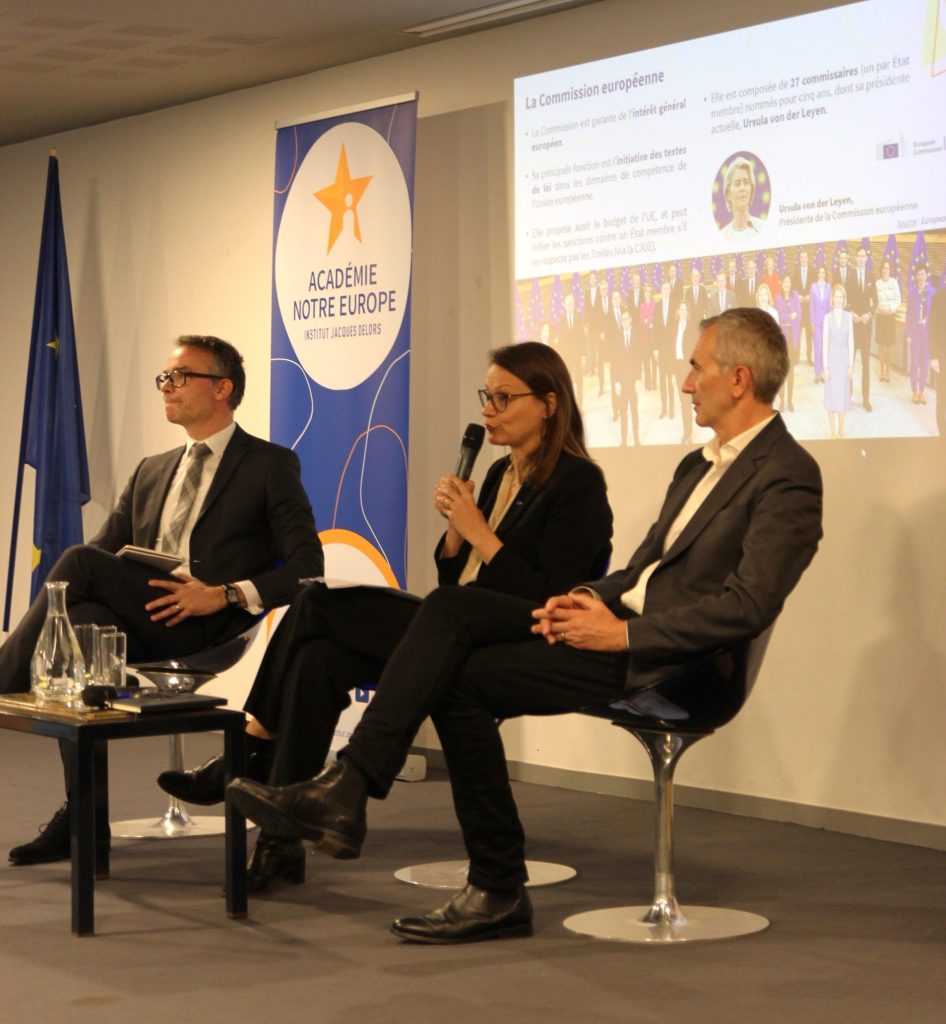
The morning continued with a panel discussion featuring :
Arnaud Magnier, Director of the Jacques Delors Institute ;
Jessica Larsson, Deputy Head of the European Commission Representation in France ;
Thierry Chopin, Adviser to the Jacques Delors Institute and Associate Professor at Sorbonne University.
Arnaud Magnier highlighted the central role of the institutions in European integration, explaining how they operate, the principle of the allocation of powers and the central role of European law. Jessica Larsson then outlined the European Commission’s political priorities for Ursula von der Leyen’s second term, as well as the role of its Representation in France.
Finally, Thierry Chopin analysed the challenges facing the European Union in an international context shaped by the rise of illiberal tendencies and shifting power dynamics. He stressed the need to strengthen European strategic autonomy, emphasising that unity among Member States is essential to defending the Union’s interests and values.
An Afternoon of Discussion and Exchange
In the early afternoon, Sofia Fernandes and Louise Damin, project officer at the Académie Notre Europe, presented the annual programme for the tenth intake, centred on the theme of values. This session provided an opportunity to introduce the young people to the various educational projects in which they will be able to get involved throughout the year, as well as the key events that will mark their programme, including the Jacques Delors Conference and the Jacques Delors Agora, which will be held this year in Tirana.
The day concluded with a discussion with the educational partners who will support the young participants throughout their journey :
- Les Jeunes Européens – France, who will help them deliver presentations in schools and introduce other young people to European affairs ;
- The Académie Notre Europe Alumni Association, which helps maintain connections between cohorts and encourages continued engagement with European affairs. It will also invite participants to get involved in organising events on current European issues.
This first day thus marked the start of a new year of learning, networking and engagement, with the aim of equipping the Académie’s members with the tools they need to better understand European issues and play a full part in the democratic life of the Union.