A study trip to Brussels to explore the European institutions!
A blog post by Tayina Daou & Sébastien Meyer, members of the 2025–2026 promotion
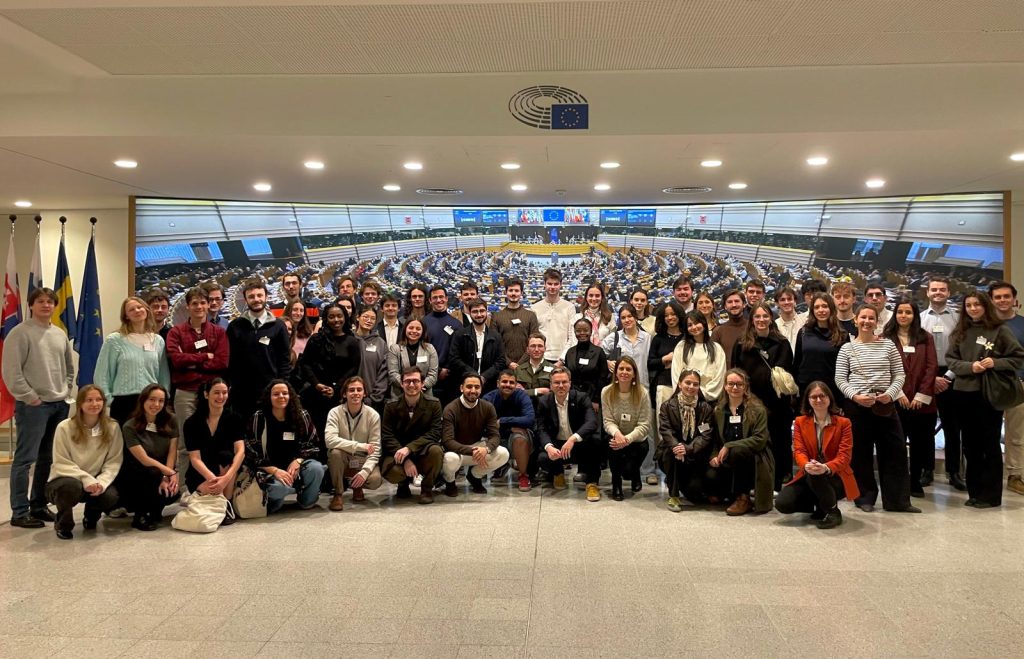
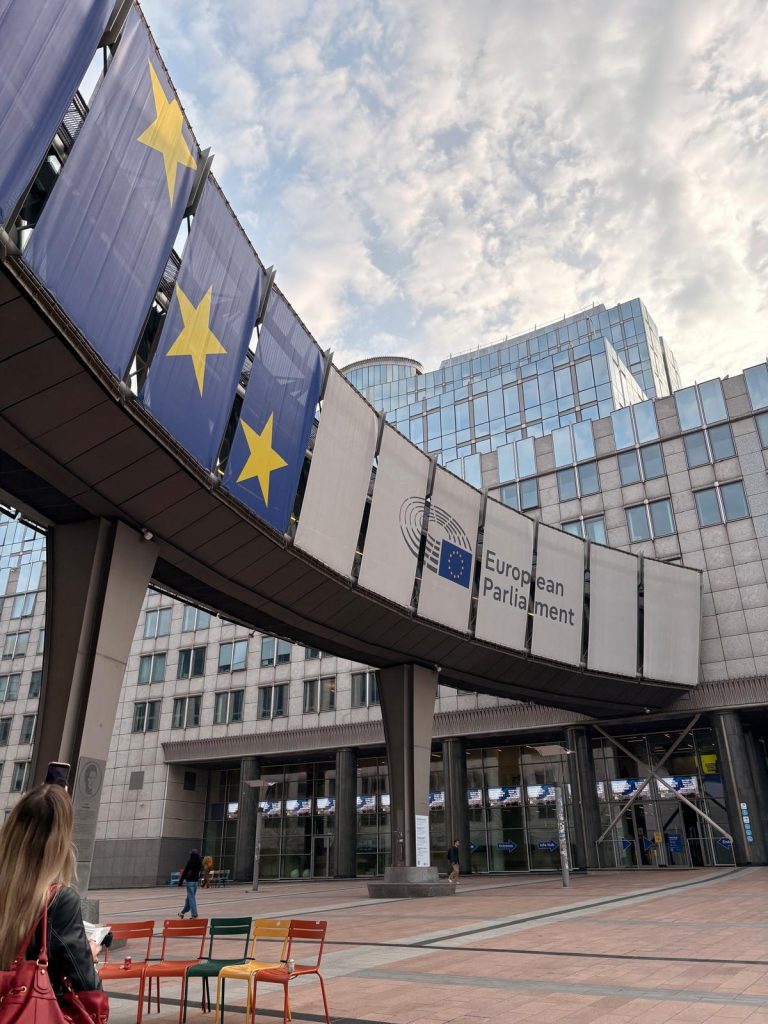
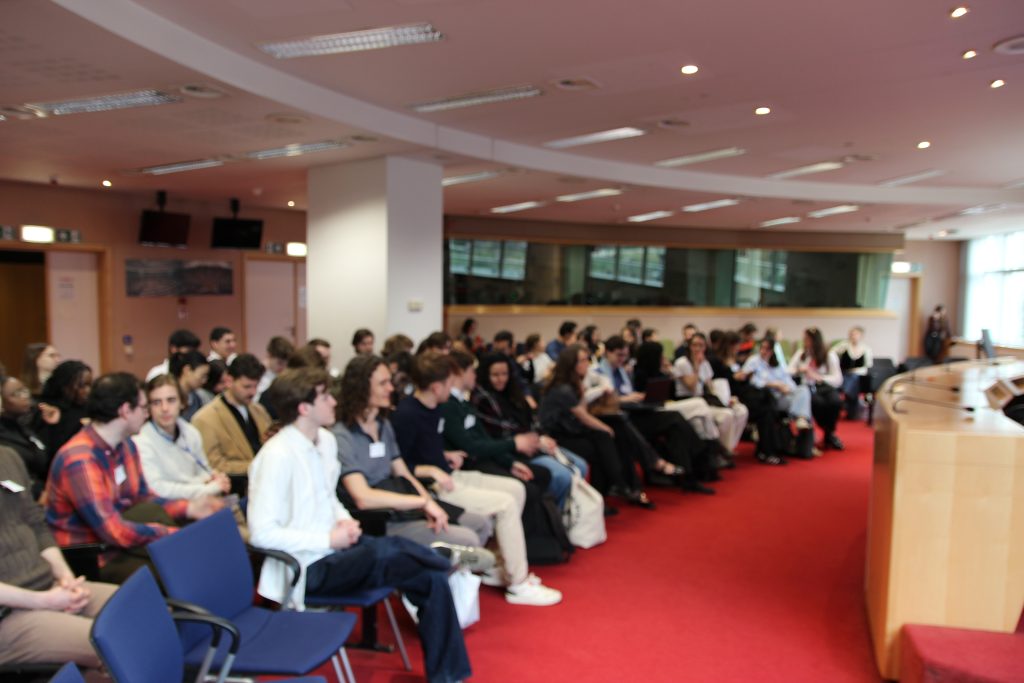
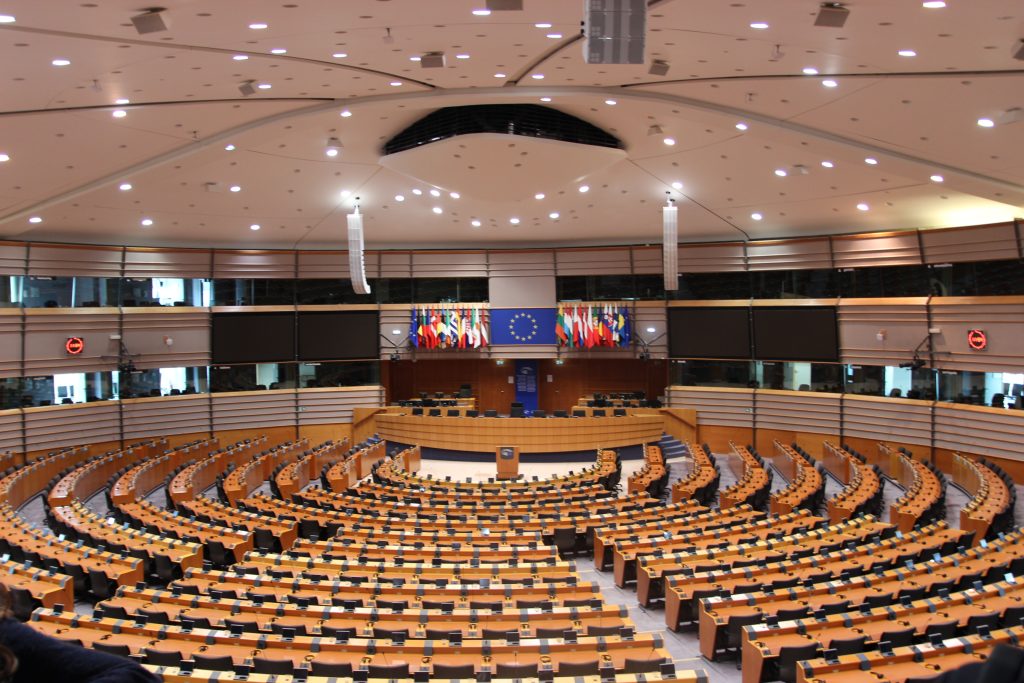
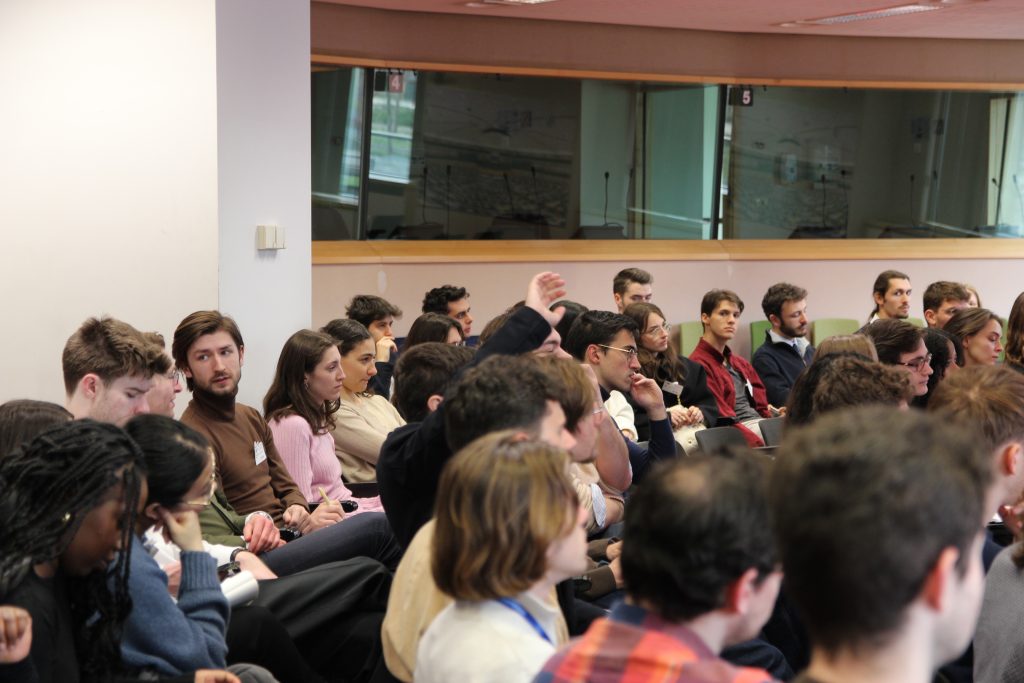
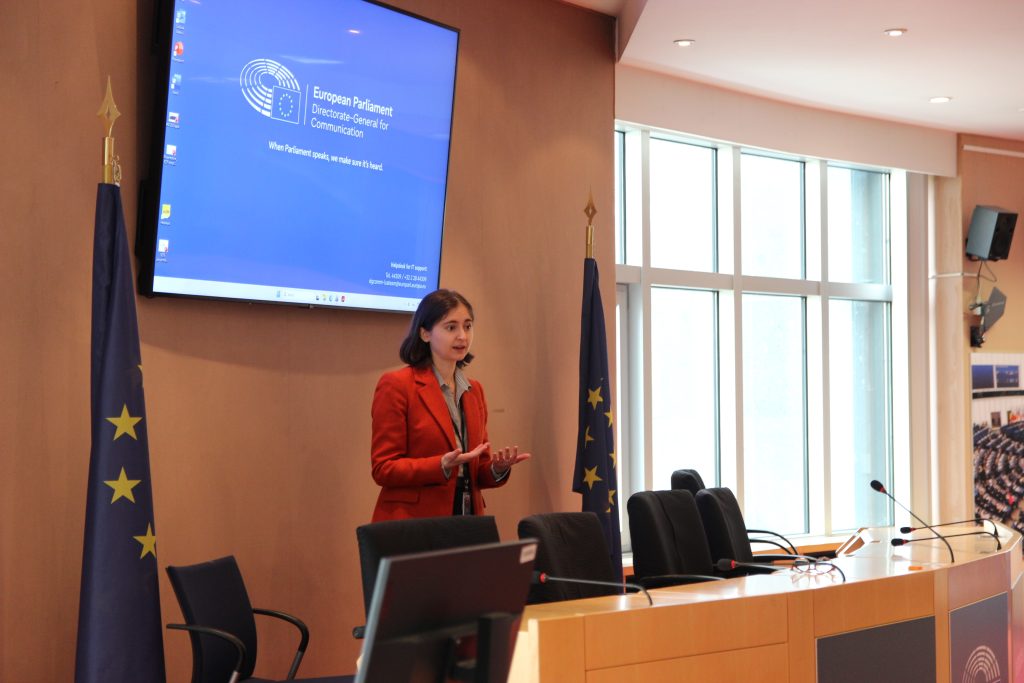
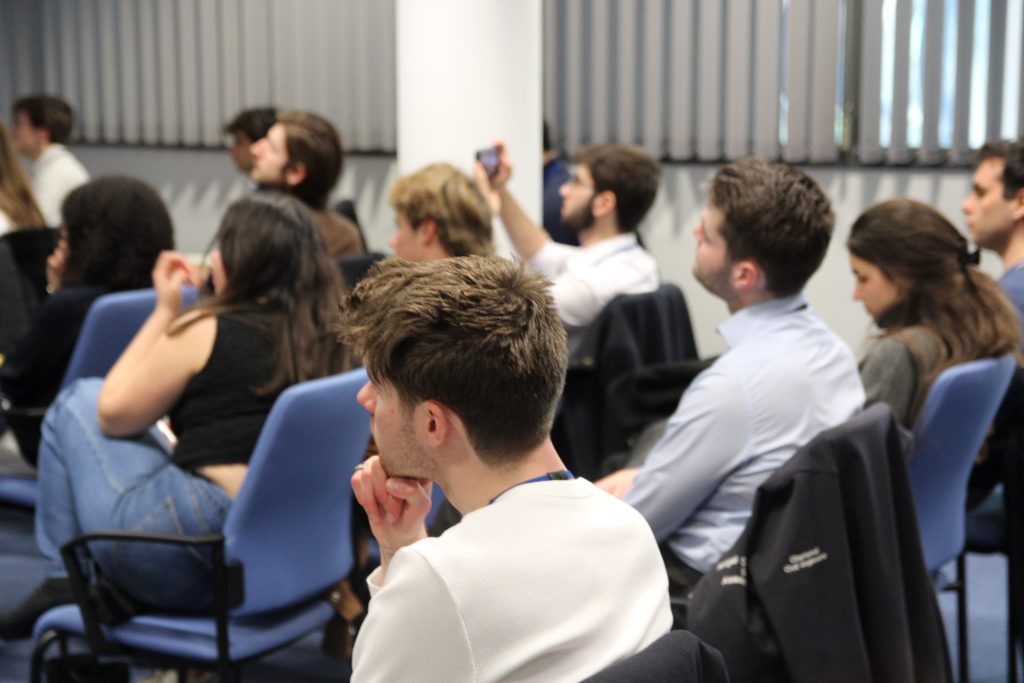
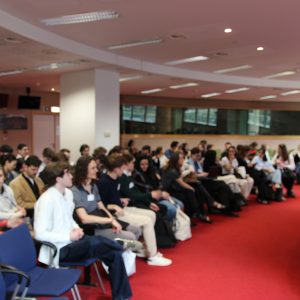
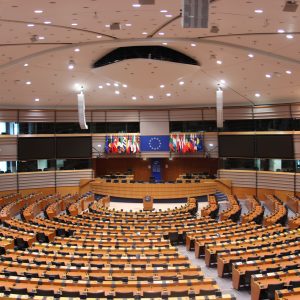
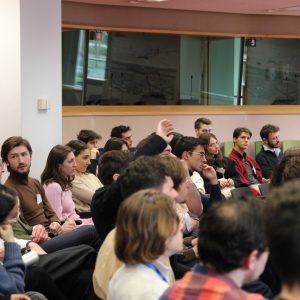
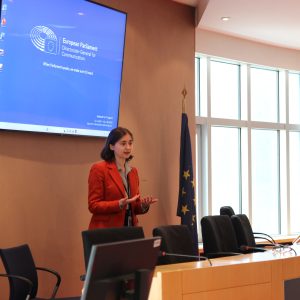
For its sixth session, the 2025–2026 promotion of the Académie Notre Europe headed to the heart of the European capital for an exceptional immersion within the institutions of the European Union. On 20 March 2026, we explored how the European Parliament works, the role of parliamentary assistants, and some of the strategic issues shaping Europe today—particularly in the fields of energy, diplomacy, and trade.
This trip took place in a particularly dynamic European context: ongoing debates on the energy transition, geopolitical tensions linked to Ukraine, and discussions around the Green Deal and renewable energy. It gave us a concrete sense of how legislative and diplomatic decisions impact citizens’ lives and the future of the continent.
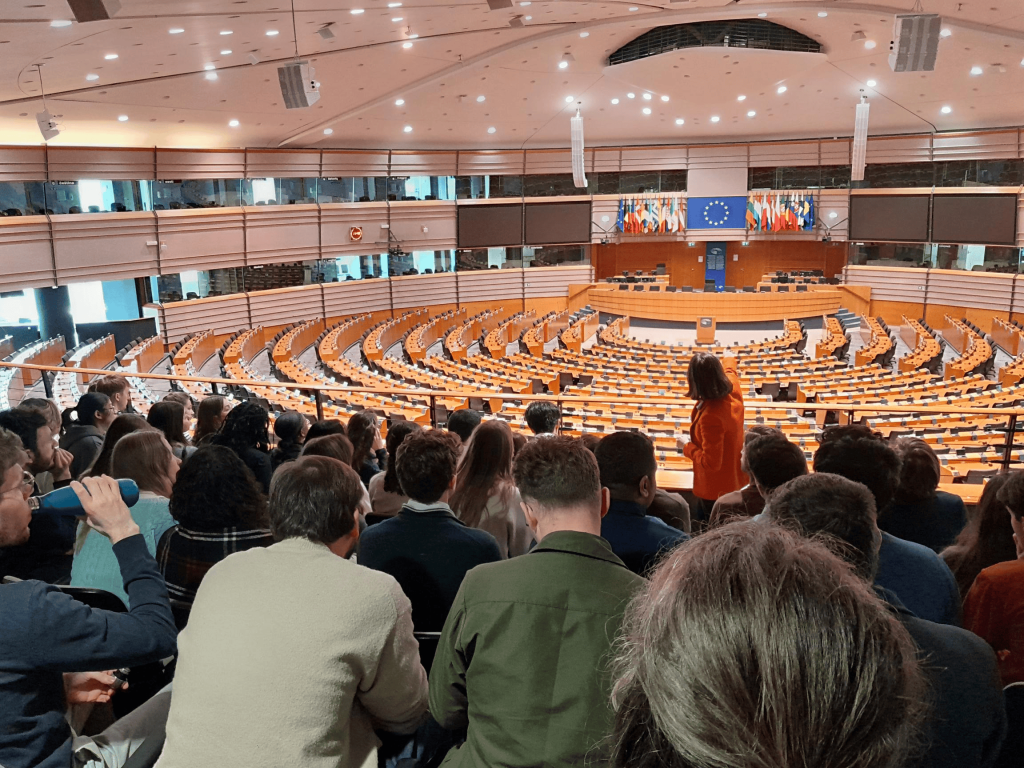
What’s an APA, and what do they do?
Working as a European parliamentary assistant (APA) means juggling legislation, committee work, communications, and administrative tasks. While all Brussels-based assistants travel to Strasbourg once a month for plenary sessions, their role goes far beyond logistics. They are true “all-rounders”: supporting visitors, drafting amendments and speeches, and handling administrative follow-up are all part of their daily routine.
APAs are employed for the duration of a Member’s mandate, with an equal budget allocated to each MEP. A typical team includes around four assistants and interns, working on both national and international assignments (such as trips to Kyiv or industrial visits in France). For those interested in pursuing this career, here’s one key piece of advice: tailor your cover letter—show why you, and why that specific MEP.
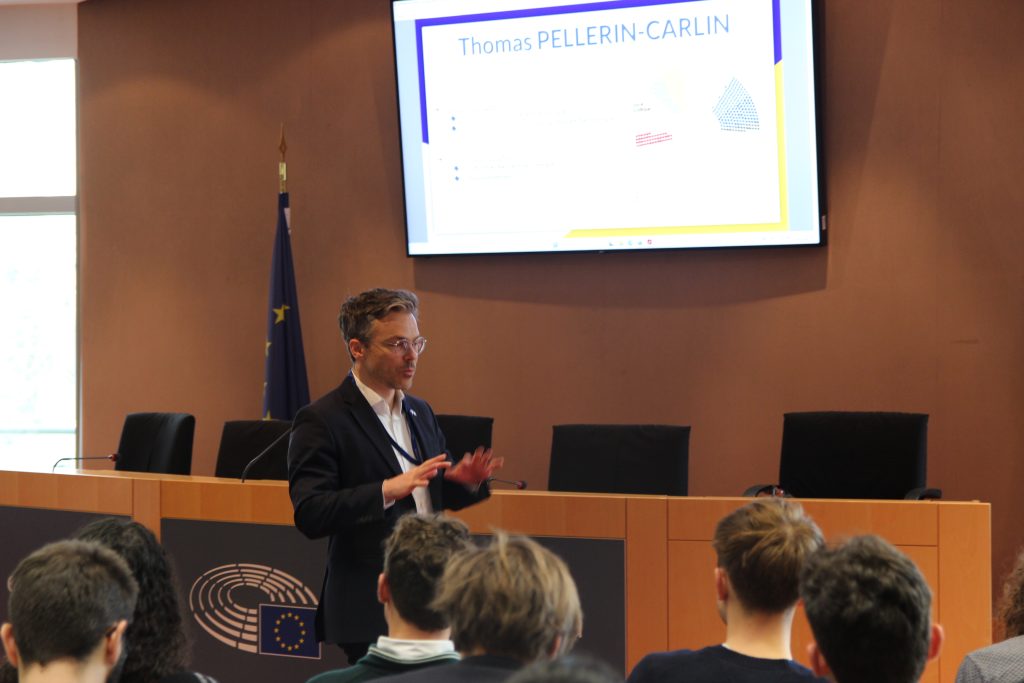
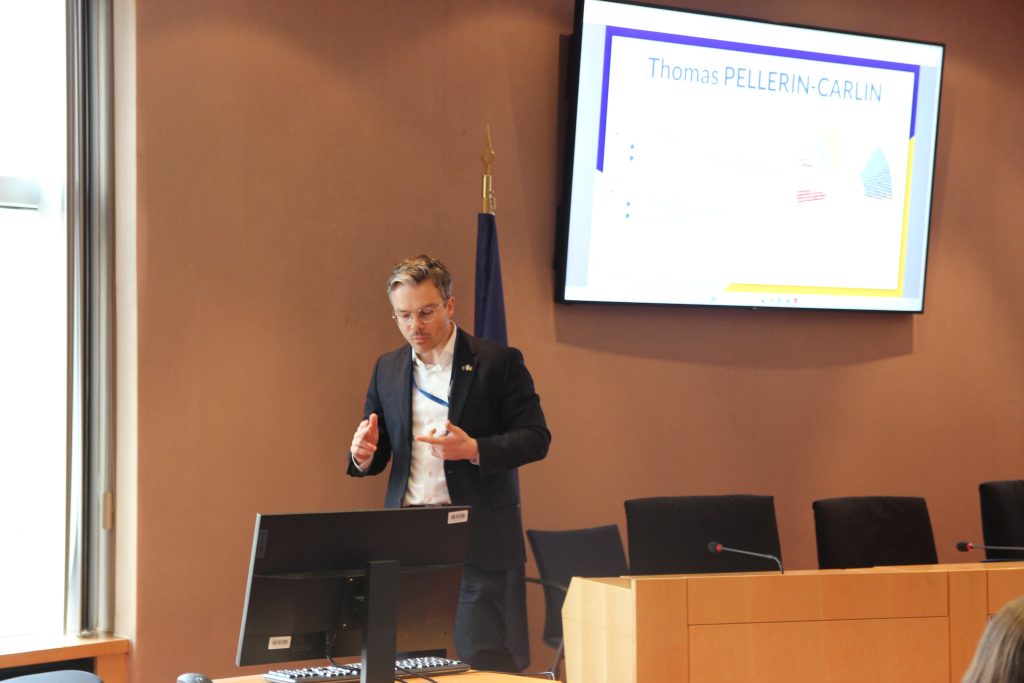
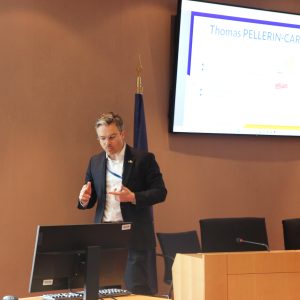
Meeting with MEP Thomas Pellerin-Carlin
Each MEP sits on several parliamentary committees. Thomas Pellerin-Carlin is a full member of the Committee on Industry, Research and Energy (ITRE). He spoke to us about the complexity of building majorities, especially at a time when traditional alliances are sometimes giving way to new configurations (notably between the EPP and the far right).
On energy policy, he answered questions from the 2025–2026 cohort, including on nuclear power. He supports a case-by-case approach depending on each Member State. However, he stressed that the success of the energy transition will primarily depend on stepping up efforts in energy efficiency, sufficiency, and renewable energy. Looking ahead 10 to 20 years, he argued, the energy transition is also the best investment we can make. For instance, although electric vehicles may have a higher upfront cost, savings on fuel quickly make up the difference. Social leasing schemes and subsidised loans can accelerate the transition and should therefore be strengthened.
Finally, he encouraged us to get involved—taking inspiration from Lena Schilling in Austria—reminding us that “appetite comes with eating.”
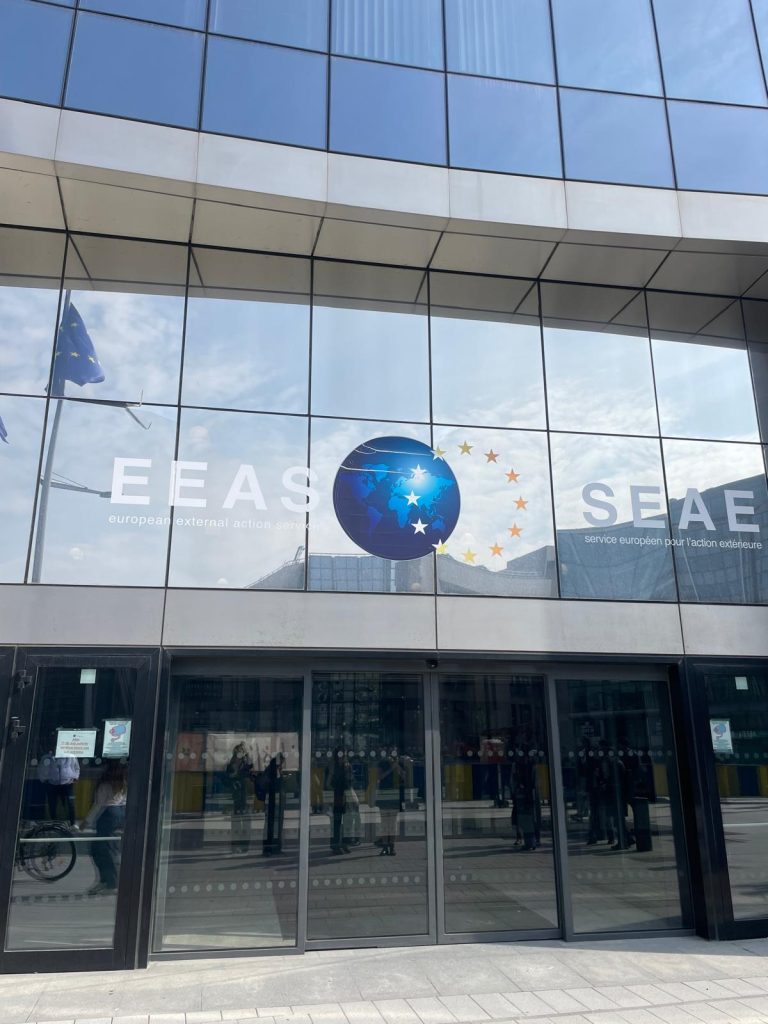
The European External Action Service (EEAS), born out of the Lisbon Treaty
Our discussion with Gurvan Le Bras, Deputy Head of Unit in the Strategic Planning Division, shed light on the unique role of the EEAS—effectively the EU’s “foreign ministry,” established in 2010. Its mission is to facilitate discussions among the 27 Member States and feed coherent proposals to the High Representative.
This coordination is all the more crucial as Europe faces an unprecedented “triangle of threats”: Russia’s military pressure on the continent, China’s systemic geopolitical challenge, and the gradual withdrawal of the United States.
On this last point, Gurvan Le Bras shared his perspective on European strategic autonomy. While moving to qualified majority voting on defence remains complex—since each country is wary of losing its veto power—a fundamental shift is underway: the ability to act collectively without full unanimity. As seen in initiatives related to Ukraine or the Strait of Hormuz, the future may lie in “coalitions of the willing.”
There can be no trade policy that is not anchored in reality
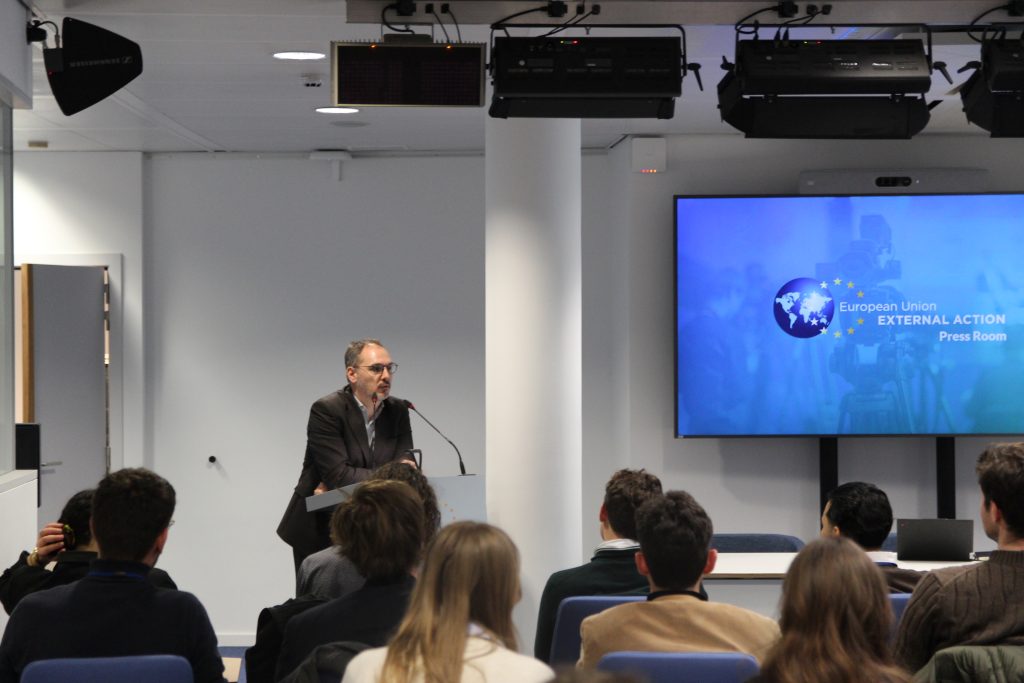
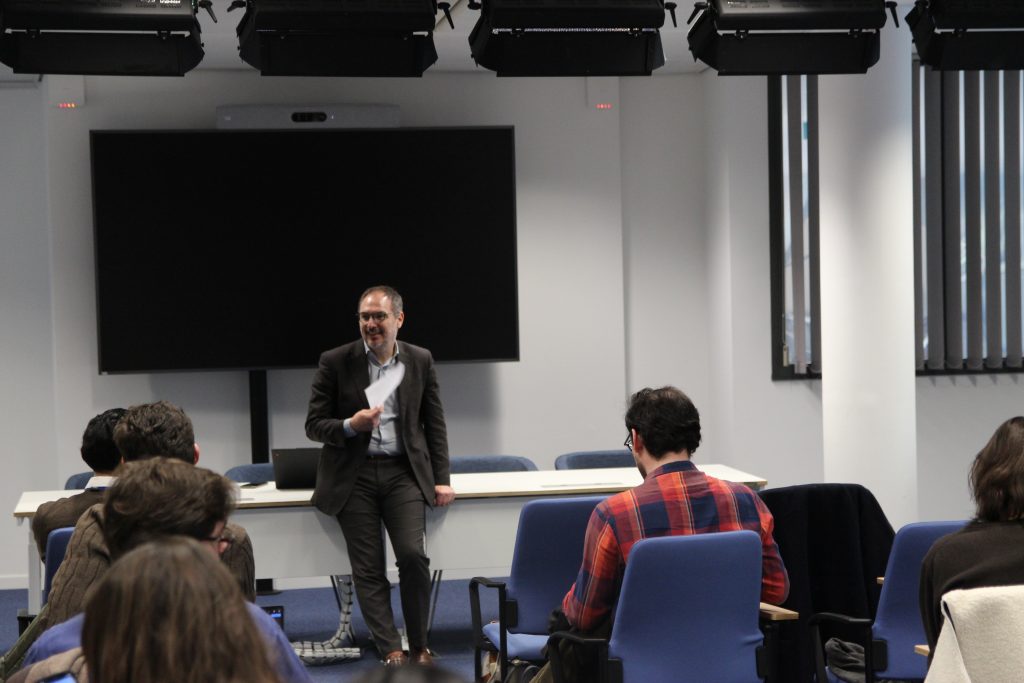
The session with Édouard Bourcieu, Chief Economist at the European Commission’s DG Trade, began with a striking observation: after twenty-five years of unfettered globalisation, geopolitics and the state are making a strong comeback in trade policy. Faced with Chinese overcapacity and American protectionism, the priority is to remain measured—stabilising relations with Washington while equipping the EU with tools to defend its interests, without fuelling a protectionist spiral.
Despite some communication bias, Bourcieu reminded us that the EU remains a giant in global trade, accounting for 15% of world trade, ahead of the United States (13%) and China (13%). As the world’s leading exporter of goods and services and the main trading partner of 60 countries, the EU wields considerable influence.
Contrary to predictions of disunity, the 27 Member States have managed to close ranks in the face of external pressure, sometimes displaying greater internal cohesion than the United States itself. This collective strength underpins what the Commission now calls “Europe’s moment of independence”—a determination to assert its sovereignty in a weakened multilateral system that urgently needs reform.
And finally…
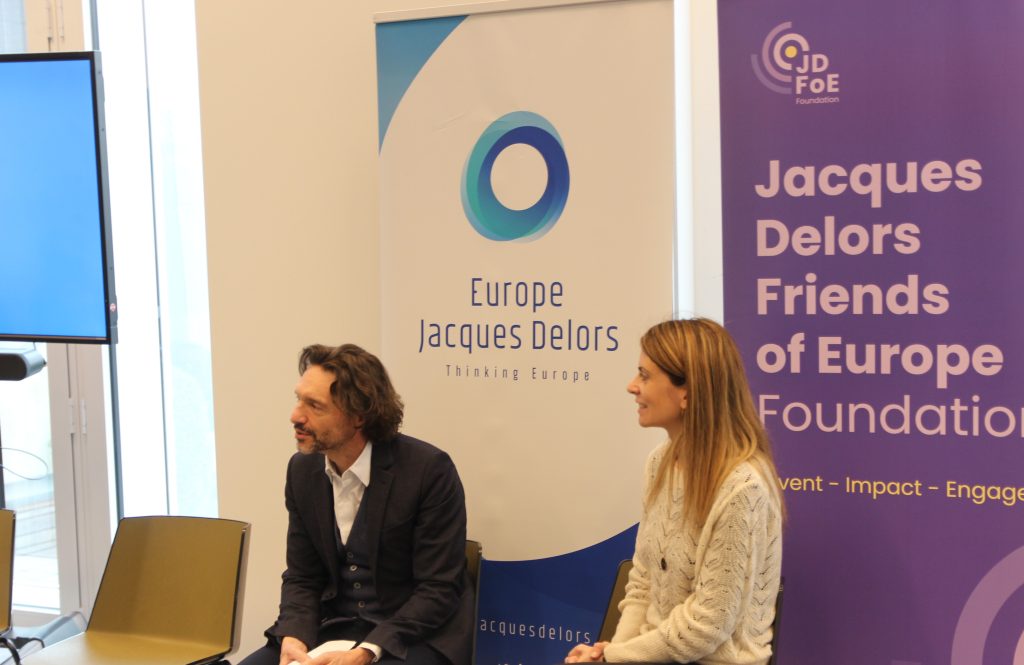
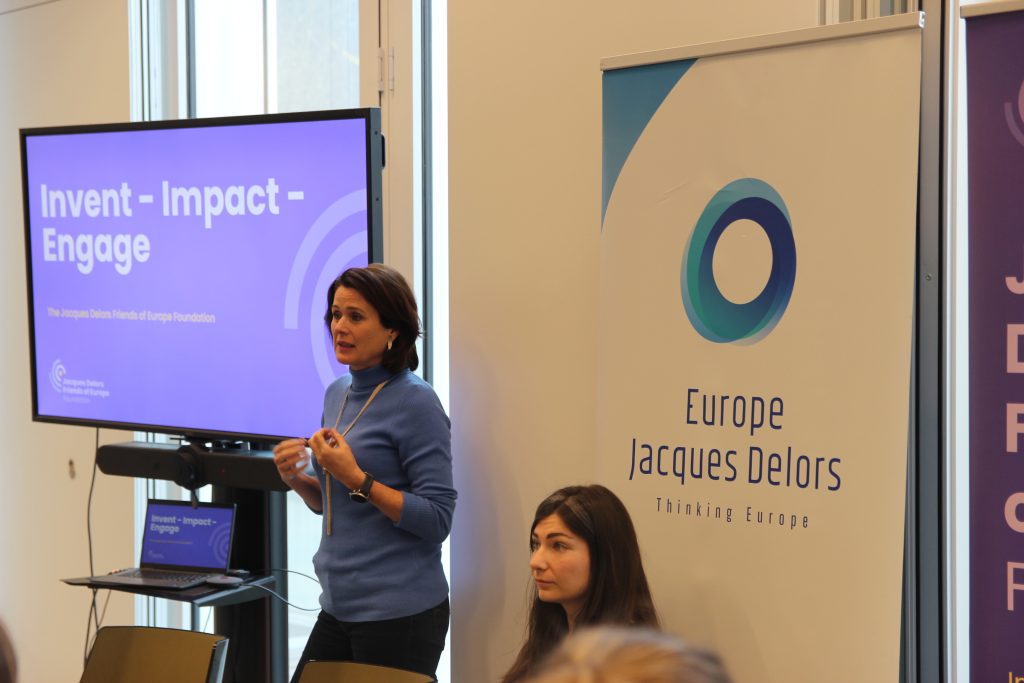
The cohort concluded this session with an immersion in the European think tank ecosystem, through the examples of the Jacques Delors Foundation / Friends of Europe and Europe Jacques Delors. These organisations aim to turn ideas into policy action around three core pillars: economic sovereignty through the Single Market 2028, collective security through increased defence spending, and the energy transition.
To drive these ambitions and counter today’s short-termism, think tanks deploy multi-channel influence strategies, combining high-level events, surveys, newsletters, social media, and programmes such as European Young Leaders.
- Tayina DAOU “It felt a bit like stepping behind the scenes—like in the series Parlement, but in real life. No scripted scenes, just genuine exchanges with experts in energy, diplomacy, and economics. It’s a world with its own codes—almost like a ‘European language’—that you have to quickly learn to keep up. And above all, what I’ll remember is that behind this system, often seen as complex, there are committed women and men working every day to defend their ideas and move Europe forward in very concrete ways.”
- Sébastien Meyer “It was like looking through Arthur’s telescope and the Minimoys, stepping into the ‘Brussels bubble’ ourselves. No grand ministry buildings, but reserved press rooms inside the European Parliament. No Ministry of Foreign Affairs, but a European External Action Service! A whole vocabulary—and experts in their fields (energy, diplomacy, economics)—that it was fascinating to hear in action, to truly grasp what it means to work within the European Union and carry its ideas forward"
Thanks to their support!
- Fondation Hippocrène